The Quiet Luxury of Joie de Vivre: Cultivating the French Art of Living
To the uninitiated, joie de vivre is often reduced to a postcard cliché: a striped shirt, a bicycle, and a baguette. But as someone who has spent a lifetime navigating the cobblestoned corridors of Paris and the lavender-scented air of the Luberon, I can tell you that the true joy of life is something far more profound. It is not an outburst of happiness, but rather a quiet, deliberate choice to appreciate the very texture of existence.
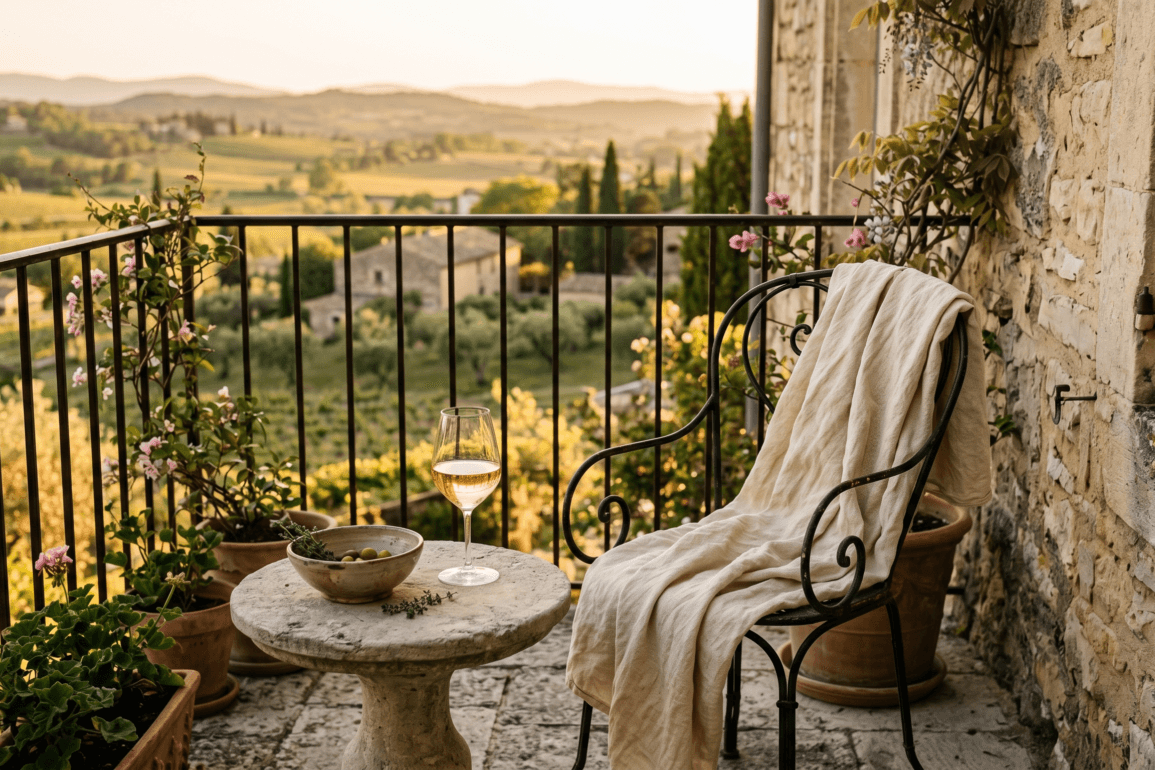
Imagine, if you will, a sun-drenched balcony in Provence. The limestone is warm beneath your fingertips, smoothed by centuries of mistral winds. A single, perfectly draped French linen throw rests on a wrought-iron chair, and a half-filled crystal glass of pale rosé reflects the liquid gold of the golden hour. There is no urgency here. There is only the presence of the moment. This is the heart of the French philosophy: a surrender to the “now” that stands in elegant defiance of the hurried American productivity mindset.
What is Joie de Vivre? Deconstructing the French Philosophy
In our modern world, we are often taught that joy is a reward for achievement. The French, however, view the joy of life as a prerequisite for a life well-lived. It is an attunement to the senses. It is the ability to find a deep, resonant pleasure in the scent of rain on hot pavement, the weight of a heavy silver spoon, or the specific shade of navy in a vintage Hermès scarf.
While the American ethos often prioritizes the “hustle,” the French prioritize the “pause.” We understand that a life lived at high speed is a life where the details are blurred. To practice joie de vivre is to sharpen the focus. It is a form of mindful resistance against the digital noise that threatens to flatten our emotional landscape.
The Cultural Origins of French “the Joy of Life”
This concept is woven into our cultural DNA. Historically, it emerged as a celebration of the secular world’s beauties, a literary and philosophical acknowledgment that the physical world is worthy of our devotion. From the naturalist observations in late 19th-century literature, as explored in this extensive cultural archive regarding the concept’s literary heritage, to the modern-day terrace culture, the focus has always been on the vitality of the present.
Why Modern Luxury Demands a Mindful Pause
For the discerning individual, modern luxury is no longer about excess; it is about space and time. In an era of constant connectivity, the ultimate status symbol is the ability to disconnect and engage with the physical world. This is where slow living meets high-end aesthetics. By adopting French rituals, you are not just changing your habits; you are reclaiming your mental clarity and surrounding yourself with understated elegance.
5 Curated Rituals to Cultivate Daily Joie de Vivre
To bring this philosophy into your own life requires a curation of micro-habits. Think of your day as a moodboard: you want to select elements that offer tactile luxury and sensory depth. Close your eyes and imagine the grain of honed Calacatta marble, the flicker of an organic beeswax candle, and the steam rising from a cup of hand-picked herbal tea.
1. The Purifying Pause: Elevating Your Morning Café
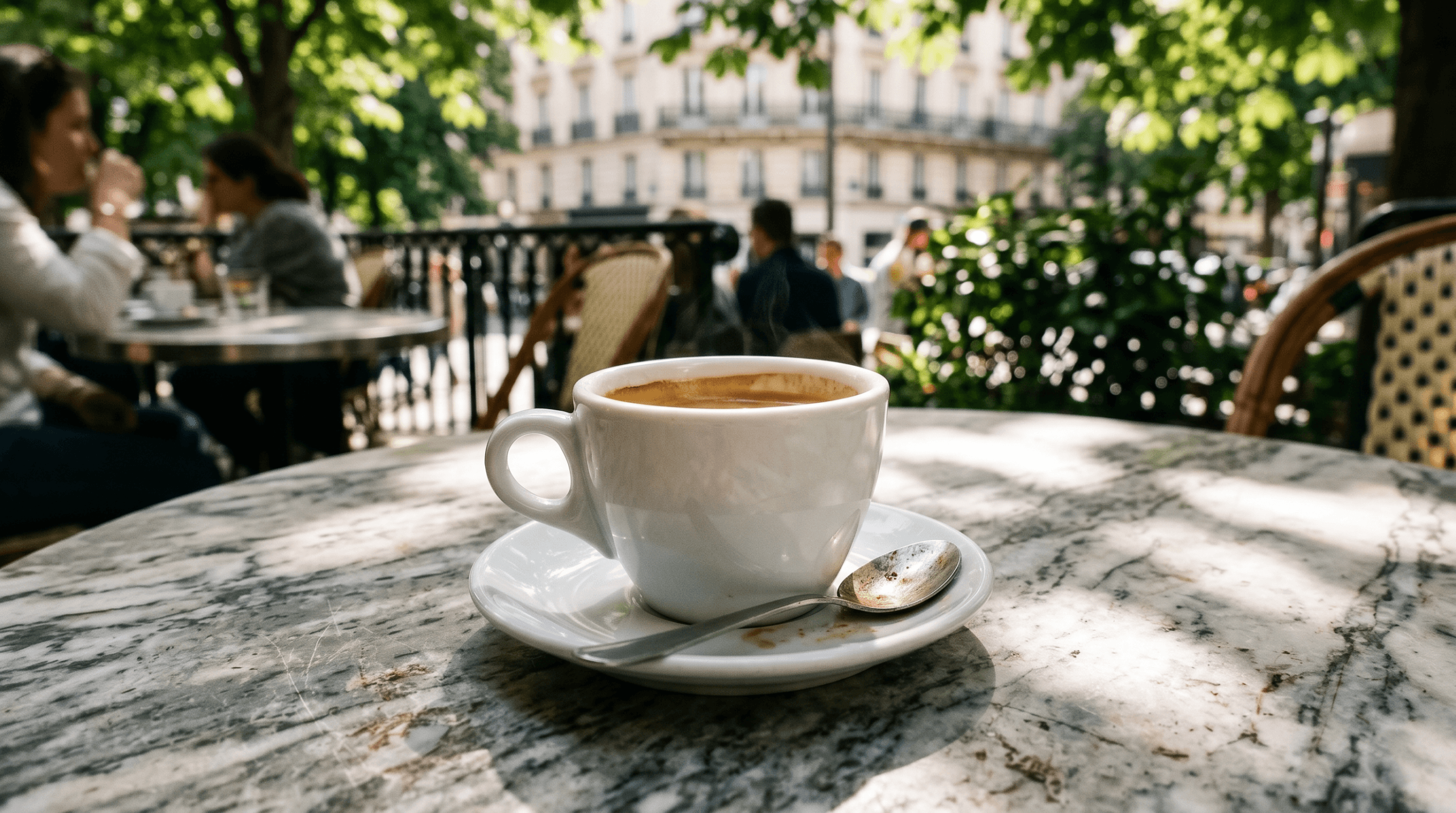
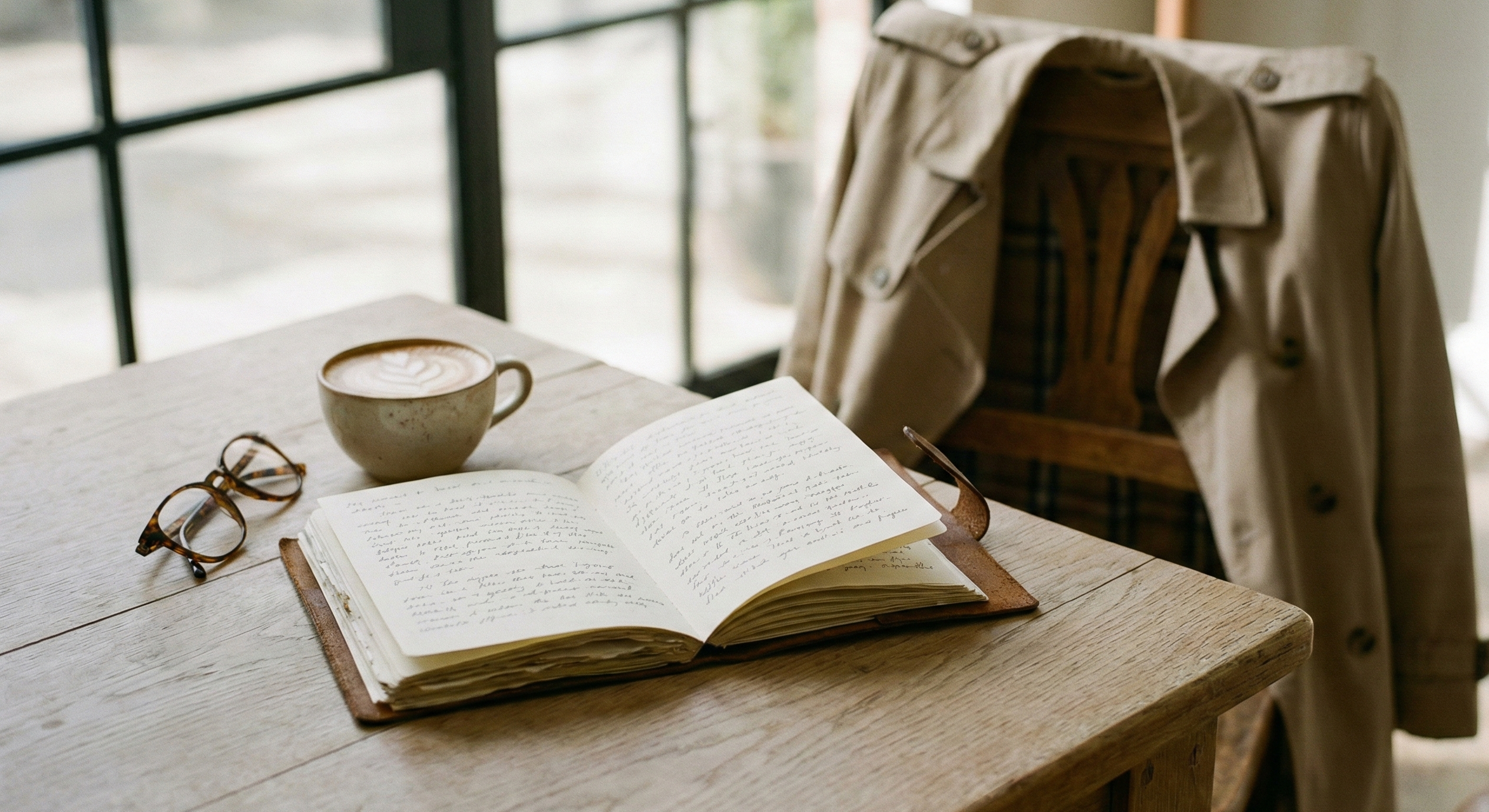
Ditch the plastic lid and the paper cup. The French morning starts with intentionality. Choose a single, milk-white porcelain cup, something with weight and history. Feel the warmth of the ceramic against your palms. Breathe in the aroma of freshly ground, single-origin beans. This is not a caffeine delivery system; it is a sensory opening of the day. Sit still. Do not scroll. Just taste.
2. The Art of the Table: Fine Linen and Heritage Porcelain
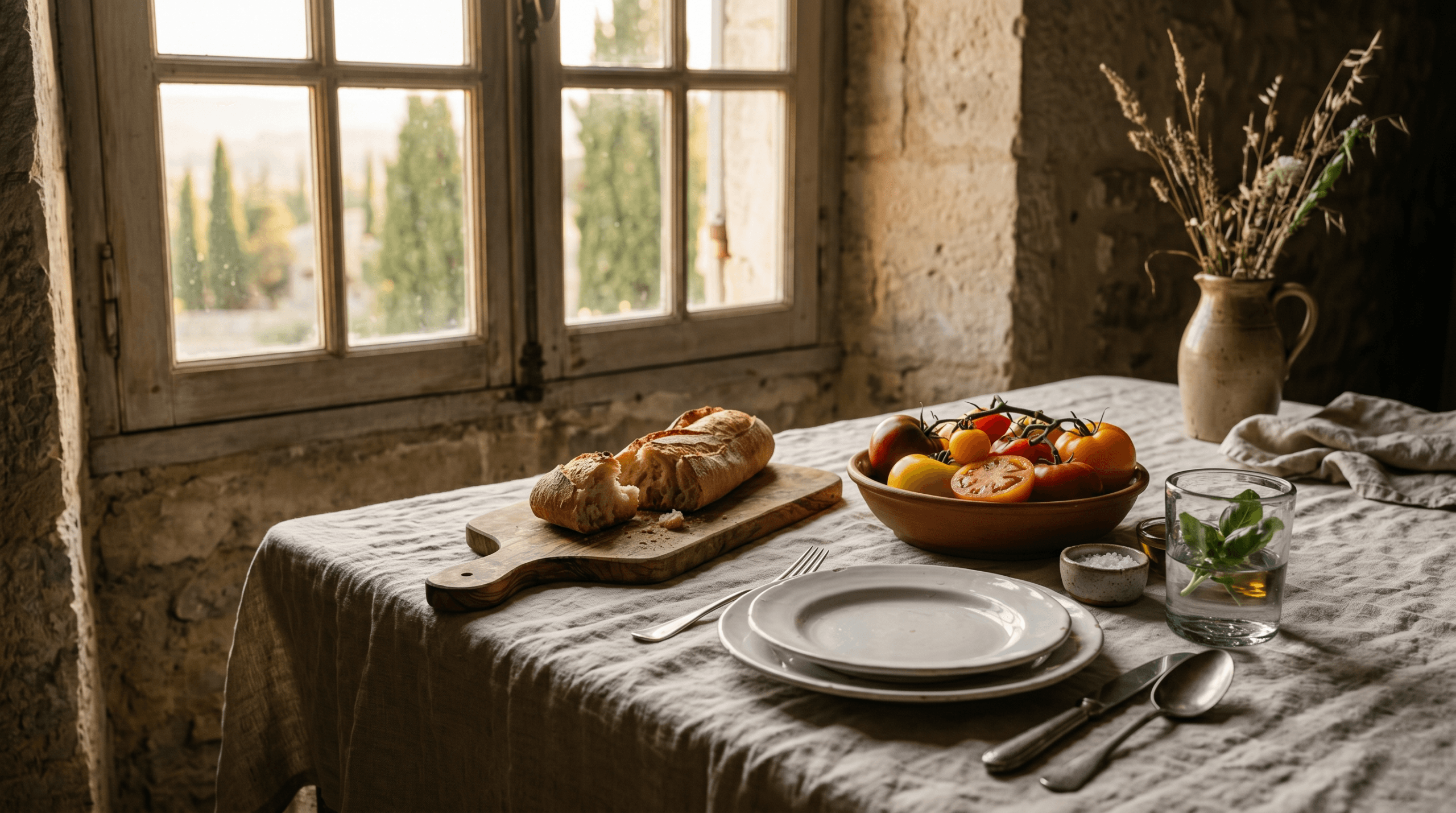
Why save the “good” china for guests? The French believe that a solitary lunch is still a theatrical event. By laying a washed linen napkin and using heavy silverware for a simple salad, you signal to your subconscious that your time is valuable. This tactile luxury shifts your psychology from “surviving the day” to “savoring the day.” It is an essential component of French country interior decorating, where even the most functional items possess a soul.
3. L’Art de la Flânerie: The Purposeful, Sensorial Stroll
To be a flâneur is to walk without a destination. In the US, we walk for exercise or to get from point A to point B. In France, we walk to observe. Put your phone in your pocket and notice the architecture, the way the wind moves through the trees, the fleeting expression of a passerby. This poetic curiosity feeds the soul and roots you in the physical world.
4. Mindful Epicurism: Curation Over Abundance
The French kitchen is built on the quality of the ingredient. Instead of a bulk grocery haul, choose one exceptional raw-milk cheese, a single perfectly ripe heirloom tomato, or a curated bottle of biodynamic wine. When you prioritize excellence over quantity, every bite becomes an event. This is the core difference in the French aperitif vs. happy hour debate; it’s about the appreciation of the craft, not the volume of the consumption.
5. Unhurried Conversations: The Digital-Free Salon
Host an intimate gathering where the only requirement is presence. Phones are left in a basket at the door. The lighting is low, the music is soft, and the conversation is allowed to drift naturally. These unhurried exchanges are the bedrock of French social life, creating deep connections that cannot be replicated through a screen.
Bringing the French Art of Living Into the American Home
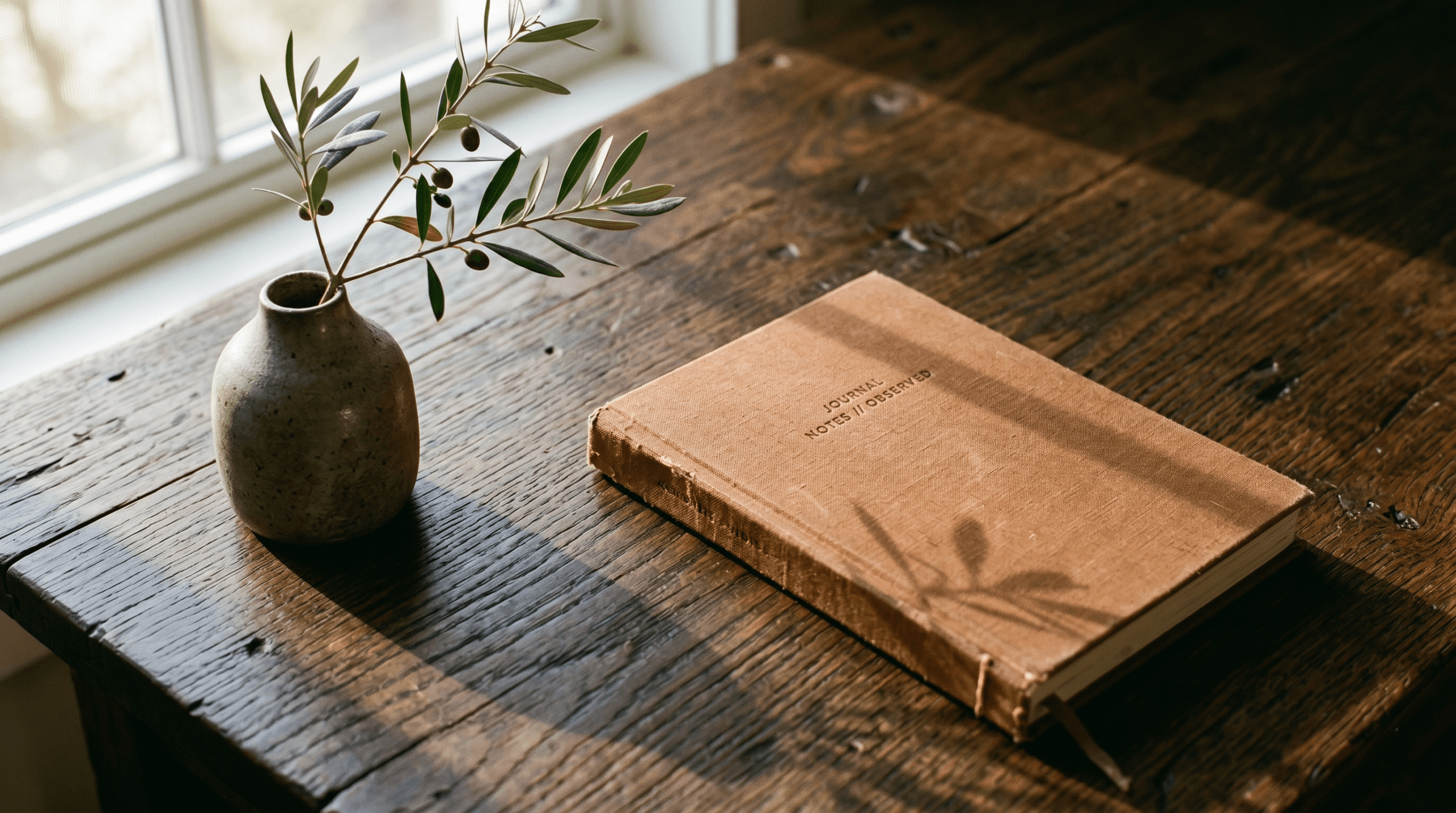
To foster joie de vivre in an American household, one must create pockets of stillness. Look at your interiors through a sensory lens. Use natural lighting to your advantage, allow the shadows to play across your walls. Incorporate organic textures like raw wood and hand-thrown ceramics. A rustic wooden tabletop, showing its rich grain and styled with a single wild olive branch, serves as a visual anchor for mindfulness.
By curating your home to be a sanctuary of the senses, you make it easier to slip into the French state of mind. It is about creating a space where the quiet luxury of existence can be heard over the roar of the modern world.
Frequently Asked Questions about Joie de Vivre
+ What is the true meaning of joie de vivre?
+ How do the French practice slow living daily?
+ Can you cultivate joie de vivre without traveling to France?
Are you ready to surrender your schedule to the beauty of a single, sun-drenched afternoon? ✨