


French Garden Design
A modern french garden balances geometric symmetry with romantic, sustainable plantings. In 2026, the focus shifts toward “Quiet Luxury”, using pea gravel paths, pleached trees for privacy, and drought-resistant Mediterranean species. Whether designing a grand estate or an urban courtyard, emphasize structural “bones,” a limited color palette, and high-quality natural materials to elevate property value.
The French Garden: A Masterclass in Timeless Design, From Formal Grandeur to Provencal Soul
Imagine the first light of a June morning in the Loire Valley. The air is cool, carrying the faint, resinous scent of clipped boxwood and the earthy perfume of damp limestone.
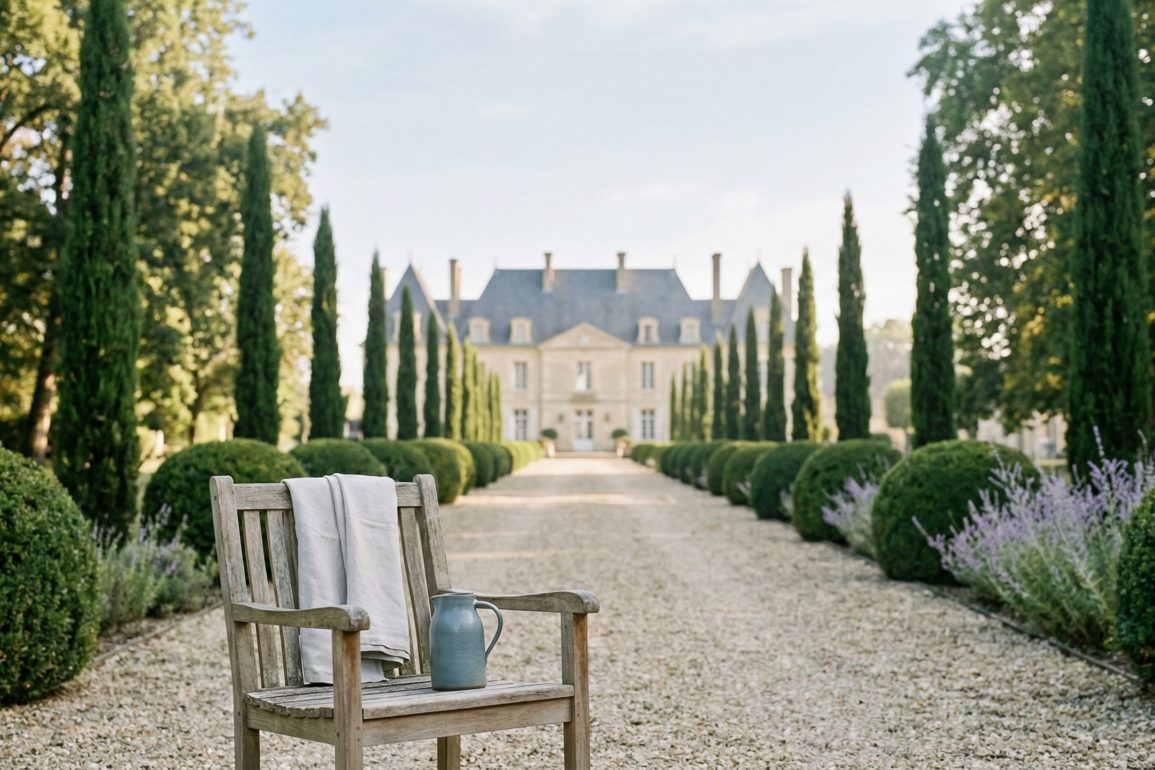
As you step onto the terrace, the only sound is the rhythmic, satisfying crunch of honey-colored pea gravel beneath your leather slides.
This isn’t just a backyard; it is a lived-in masterpiece that serves as the natural extension of french country interior decorating.
Designing a french garden in 2026 is no longer about replicating the rigid opulence of Versailles. Instead, it’s an exercise in Quiet Luxury, balancing architectural discipline with the effortless romance of the natural world.
I. The Philosophy: Geometry vs. Romance
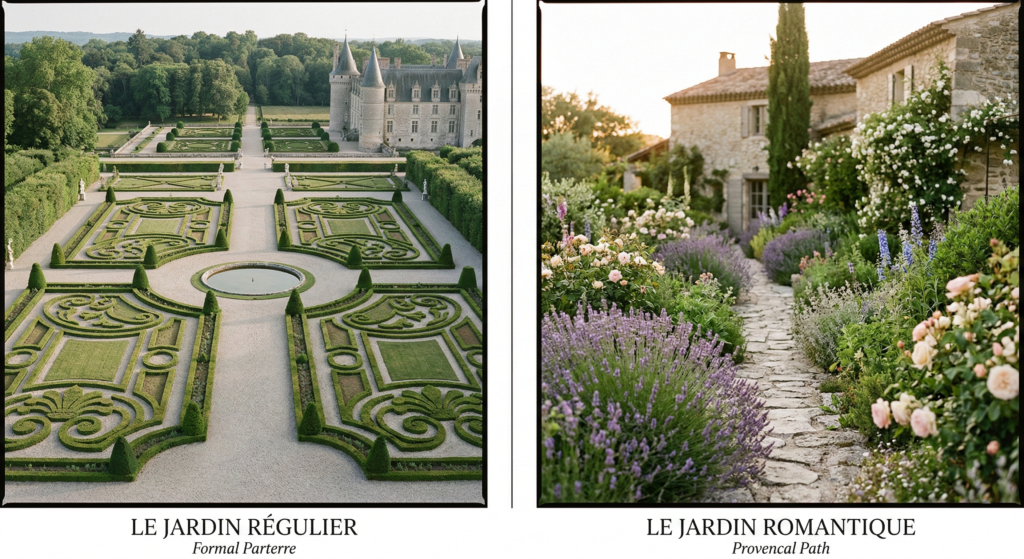
To understand the French exterior, one must master the balance of L’Ordre et la Nature.
We generally see two distinct spirits: the Jardin à la Française, defined by its power-play of symmetry and perspective, and the Jardin de Curé, a more intimate, overflowing tapestry of flowers and herbs.
The modern estate often blends both. It uses axial symmetry to create a sense of calm and “bones,” while allowing the plantings within those lines to feel lush and slightly untamed.
II. Structural Bones: Defining the Canvas
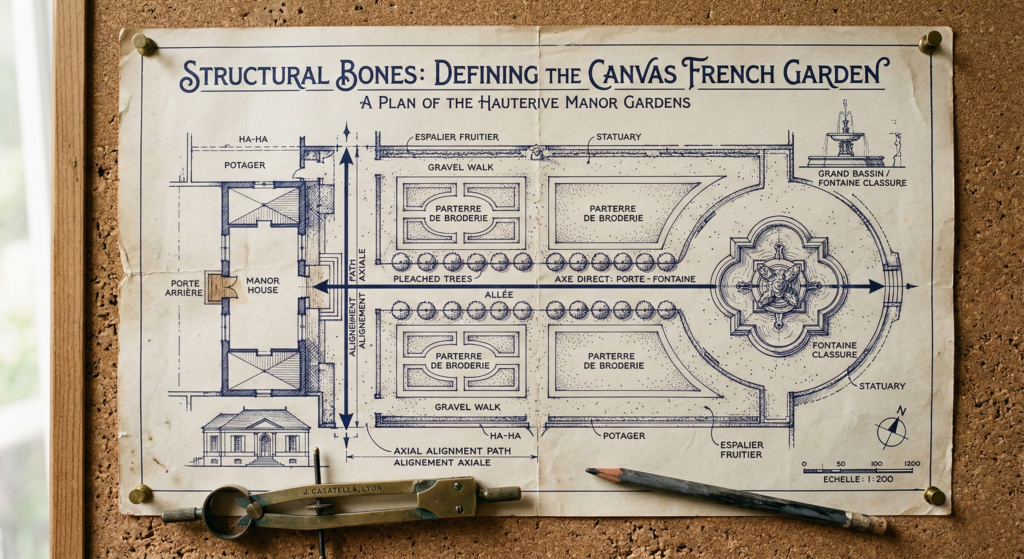
The “French look” starts with green architecture. Even in a compact urban space, you can create a sightline, a visual path that leads the eye to a focal point, such as a weathered stone urn or a simple wrought-iron bench.
Instead of traditional boxwood, which faces modern blight challenges, we now look to blight-resistant alternatives like Ilex crenata or Taxus baccata.
Using pleached trees (trees trained on a stilt-like hedge) is the ultimate “Insider” move to create privacy and height without losing precious ground space.
To achieve instant Parisian cohesion, limit your hardscape and floral palette to exactly three tones. Typically, this includes Stone (warm beige or cool grey), Leaf Green (the structural base), and a single Accent (Lavender blue, white, or deep violet). Anything more feels cluttered; anything less feels sterile.
III. The Textural Palette: Hardscaping with Soul
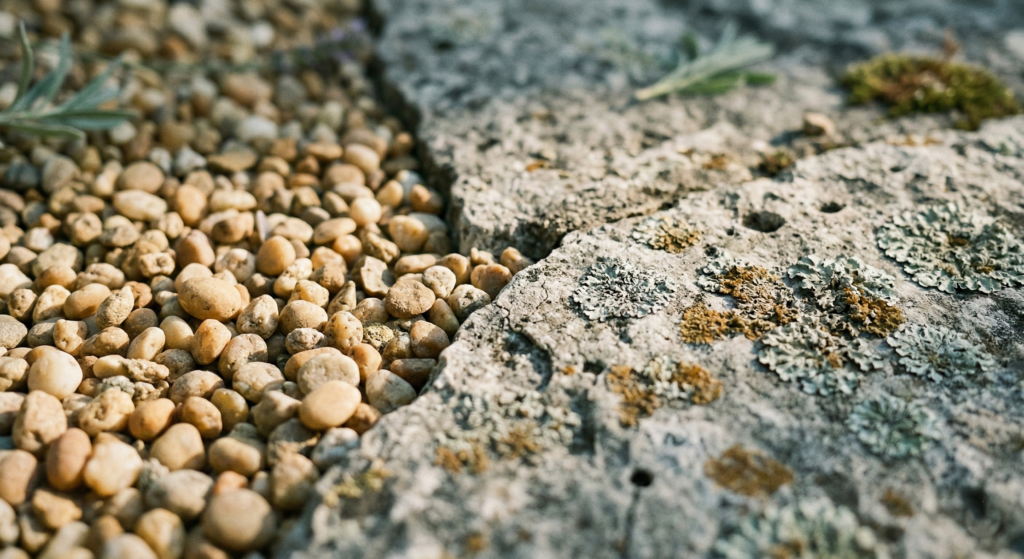
In a high-end french garden, the materials underfoot are as important as the plants. Avoid poured concrete or modern pavers. We opt for reclaimed French limestone or weathered terracotta.
The use of pea gravel (gravier) is non-negotiable for the authentic sensory experience.
It reflects light beautifully up into the leaves and provides that specific auditory signature that defines a French property.
IV. The Modern Potager: Where Beauty Meets Utility
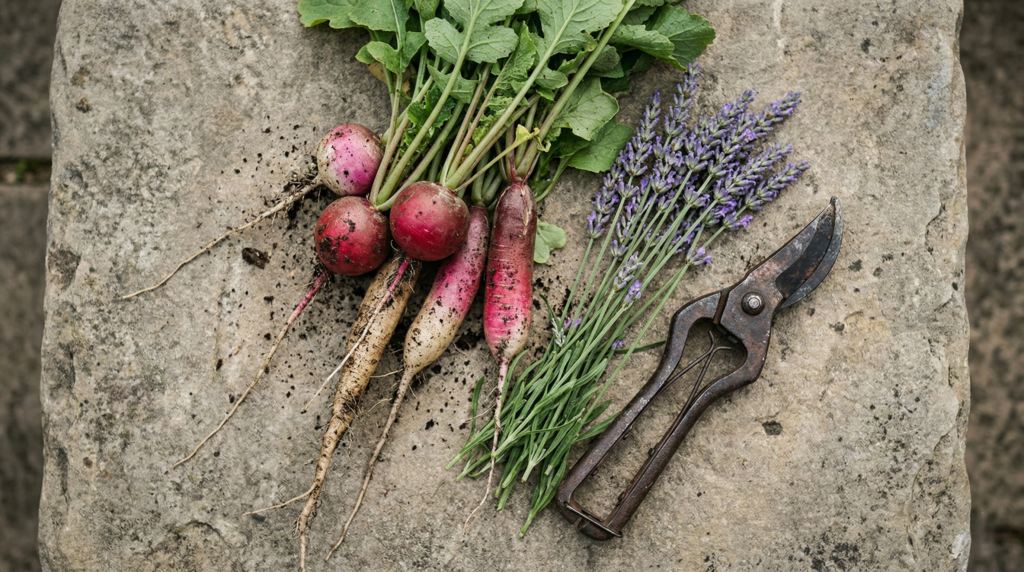
We are seeing a massive shift toward the Luxury Potager.
This is a vegetable garden designed like a jewelry box. Use raised beds edged in woven willow (plessis) and intersperse your heirloom radishes and kale with climbing roses and marigolds.
It transforms a utility space into a destination for a sunset French aperitif, where homegrown herbs like rosemary or thyme can garnish your glass.
V. Sustainable Chic: The Water-Wise French Garden
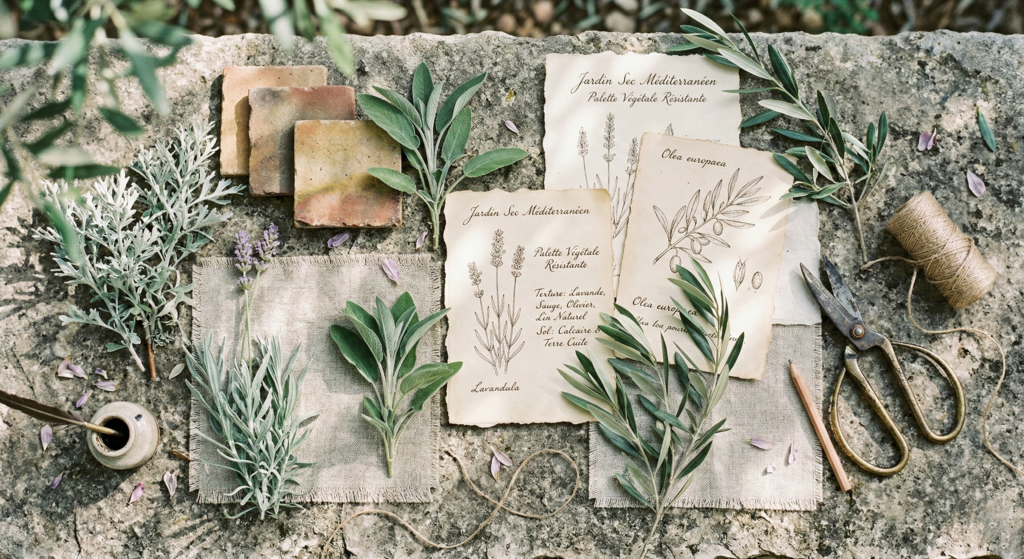
As we navigate the climate of 2026, luxury is now synonymous with sustainability. The “Dry French Garden” utilizes Mediterranean soul, think silver-foliage plants like Cistus, Santolina, and hardy Rosemary.
These species offer that coveted Provencal aesthetic while requiring minimal irrigation, proving that environmental consciousness is the highest form of elegance.
Whether you are designing a sprawling acreage or a “Petit Jardin” on a limestone balcony, the principles remain the same.
A successful french garden is a long-term investment in your property’s heritage, favoring quality materials and structural integrity over fleeting garden trends.