
French Country Interior Decorating: The Insider Secrets
Modern French country interior decorating (or “Modern Rustique”) blends rugged architectural elements with refined heritage antiques. Key features include natural stone or wide-plank wood flooring, lime-washed walls, and exposed beams. The style rejects matching furniture sets, preferring a mix of rustic farm tables and elegant Louis XVI chairs. The palette is earthy—greige, sage green, and terracotta—prioritizing texture (linen, wood, stone) over clutter or bright patterns.
French Country Interior Decorating: How to Master “Le Vécu” 2026
Imagine the sound of gravel crunching under tires as you approach a stone bastide in the Luberon. Inside, the air is cool, smelling faintly of beeswax and dried herbs. This is the essence of French country interior decorating. It is not about clutter, roosters on ceramic tiles, or aggressive floral prints.
True French style is rooted in a concept we call “Modern Rustique.” It is a philosophy of Raw Luxury, where the texture of a stone wall or the patina of an antique table speaks louder than any brand name.
In 2026, we are moving away from the “Shabby Chic” of the past decade toward a cleaner, more architectural aesthetic.
If you are looking to bring this timeless elegance to your home, you must first unlearn the clichés.
Let’s explore how to master the authentic modern french country look, blending heritage with sophisticated minimalism.
I. The 4 Pillars of French Country Architecture
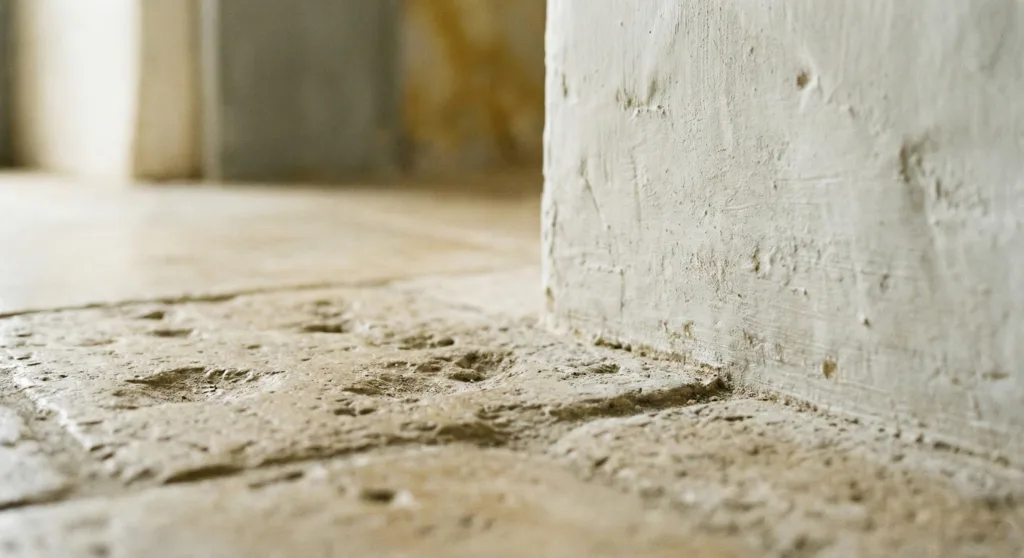
Before you buy a single piece of furniture, you must address the “bones” of the room. The secret to french farmhouse interior design lies in the materials. We prioritize durability and natural origin over perfection.
Flooring: The Foundation
Forget wall-to-wall carpeting. The French home relies on hard, cool surfaces.
- Stone: Look for Pierre de Bourgogne (Burgundy stone) or tumbled Travertine. The layout should be irregular or in a “Roman opus” pattern to mimic age.
- Wood: If you prefer wood, opt for wide-plank oak with a matte, oiled finish, or a classic Herringbone parquet for a touch of Parisian elegance in a country setting.
Walls: Texture Over Wallpaper
While wallpaper has its place, the quintessential french country material for walls is Lime Wash (La Chaux). This mineral paint creates a chalky, nuanced depth that interacts beautifully with natural light. It feels alive, unlike flat acrylic paint.
Ceilings: Exposed History
Exposed beams are the hallmark of the style. In a “Modern Rustique” approach, we often leave them raw if the wood is beautiful, or paint them a soft white to lift the ceiling height and brighten the room.
Light: The Iron Touch
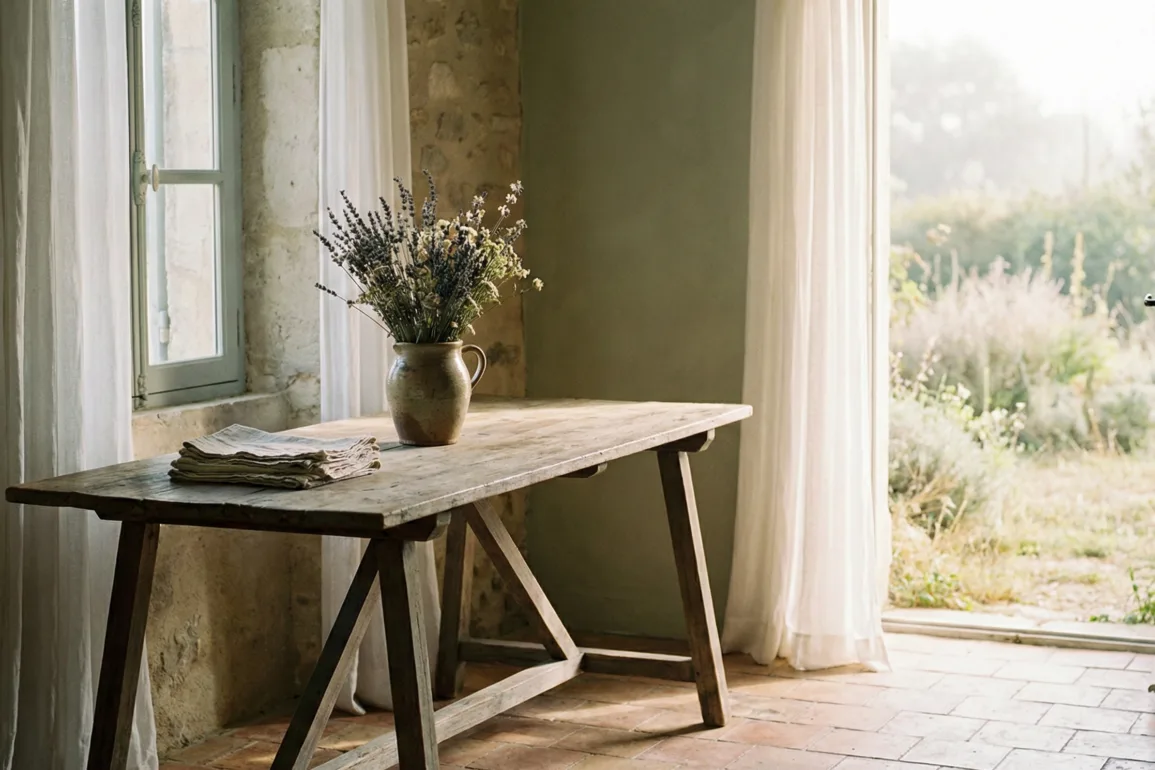
Replace standard sliding doors with black iron windows or French doors. Dress them with heavy, floor-pooling drapes in neutral tones. The contrast between the black metal and the soft fabric is key to the aesthetic.
If the rustic aesthetic feels too relaxed for you, consider the more structured elegance of a parisian flat.
Don’t rush to fix everything. In France, we value le vécu (the lived-in look). If your floor tiles are slightly uneven or your brass hardware is tarnishing, leave it. We call this patina, and it is the ultimate sign of “Old Money” confidence. A home that looks brand new lacks soul.
II. The Palette: Colors of the Earth
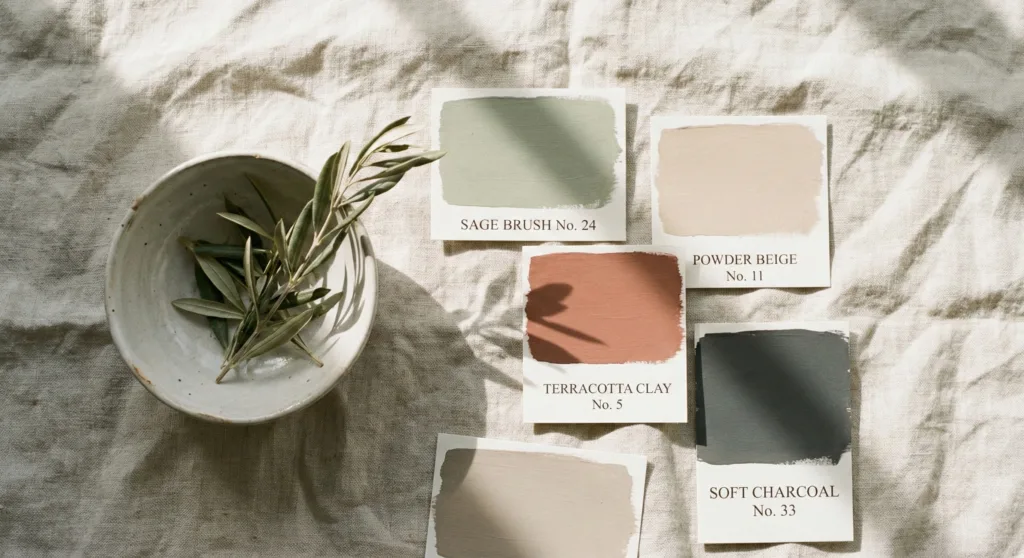
The biggest misconception about french cottage style is the overuse of bright yellows and royal blues. That is the “postcard” version of Provence, not the reality of how we live.
The modern palette is drawn directly from the landscape:
The Base
Warm Greige, Off-White, and Plaster Pink. (Think Farrow & Ball’s “Joa’s White”).
The Woodwork
Sage Green or “Vert de Gris” on shutters and doors.
The Warmth
Terracotta and Ocher, brought in through flooring or pottery.
The Accent
Faded Blue, used sparingly, like a washed-out summer sky.
III. Furniture Sourcing: The “Mix & Match” Rule
The golden rule of French country interior decorating is to never buy a matching set. A “suite” of furniture looks like a showroom, not a home.
The Hierarchy of Styles:
We effortlessly mix periods. You might see a rustic, heavy farm table surrounded by delicate Louis XVI chairs (identified by their straight, fluted legs and oval backs). The contrast between the rough wood and the refined upholstery creates tension and interest.
The Centerpiece:
Invest in a massive Armoire. In many old French homes, built-in closets didn’t exist. An antique walnut armoire is practical for storage and anchors the room visually.
IV. Textiles & Patterns: The “French Cottage” Softness
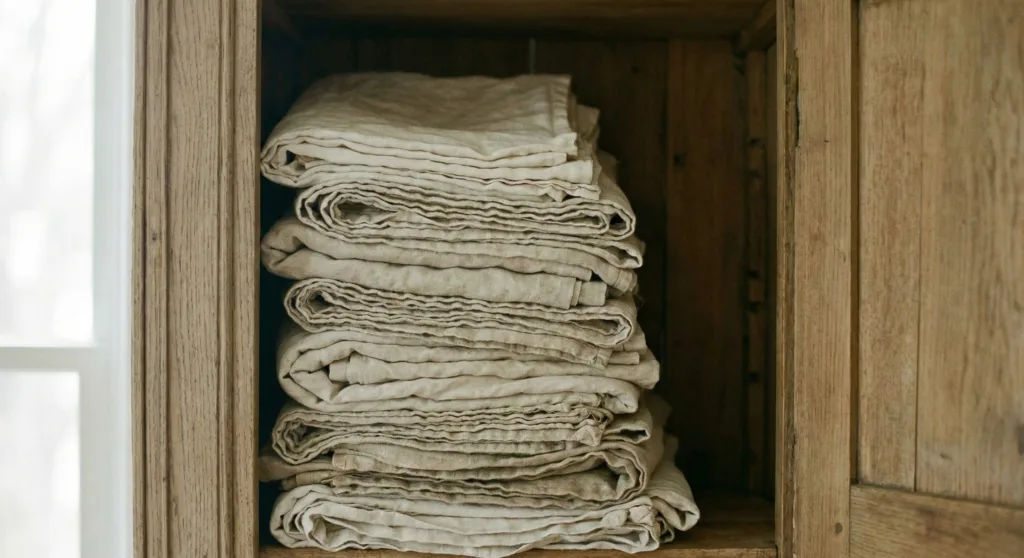
To soften the stone and wood, we layer textiles. But be careful: the quality of the fabric matters more than the print.
- Linen is King: Invest in high-quality washed linen for bedding and curtains. Brands like Cultiver or MagicLinen capture that crumpled, effortless look we love.
- Toile de Jouy: Use it, but modernize it. Instead of covering an entire room, use Toile on a single armchair or as wallpaper in a small powder room.
- Hemp: Vintage hemp sheets (often found with monograms at flea markets) make incredible table runners or upholstery fabric.
V. Room by Room: The Anatomy of Style
The Cuisine (Kitchen)
This is the heart of the French home.
Must-Haves: A “Piano de Cuisson” (a serious range like Lacanche or La Cornue), copper pots hanging from a rack, and a deep stone or ceramic farmhouse sink.
Layout: Open shelving rather than heavy upper cabinets to display your everyday dishware.
The Salon (Living Room)
Must-Haves: An oversized limestone fireplace. Above it, lean a Trumeau mirror (a mirror with a painted or carved panel at the top) against the wall rather than hanging it perfectly straight.
Decor: Large sisal or jute rugs to ground the space.
The Bain (Bathroom)
Must-Haves: A freestanding clawfoot tub and unlacquered brass taps that will age over time. Avoid modern vanity units; repurpose an antique chest of drawers and install a sink on top.
VI. The “Faux Pas” to Avoid
To maintain the integrity of the modern french country look, steer clear of these errors:
- Fake Distress: Furniture that has been painted white and mechanically sanded to look old. It looks cheap. Buy real vintage or new, honest wood.
- The Theme Park Look: Signs that say “Cuisine,” “Boulangerie,” or “Café.” We know it’s a kitchen; we don’t need a sign.
- Synthetic Fabrics: Polyester curtains or shiny rugs kill the vibe instantly. Stick to wool, cotton, linen, and silk.
French country interior decorating is ultimately about slowing down. It creates a space that invites long Sunday lunches and quiet afternoons with a book. It’s not about impressing neighbors with flashiness, but welcoming friends with warmth.