

French Easter
In France, Easter (Pâques) transcends clichés, focusing on Quiet Luxury and heritage. Instead of the bunny, the “Flying Bells” (Les Cloches) bring chocolates. Celebrations feature Haute Chocolaterie from master chefs, prestigious egg hunts at Châteaux, and a traditional feast of Gigot d’Agneau. It’s a season of refined craftsmanship and sophisticated family gatherings.
Beyond the Bunny: The Art of a Refined French Easter (Pâques) Celebration
Imagine the soft morning light filtering through the zinc rooftops of the Rive Gauche, as the scent of freshly baked brioche mingles with the crisp spring air.
In Paris, Easter is not a commercial frenzy of neon plastic eggs. It is a masterclass in heritage, craftsmanship, and the quiet joy of a new season.
Forget the oversized rabbits of your childhood. We celebrate the return of the light with a sophistication that honors both the palate and the soul. To experience a true French Easter in 2026 is to embrace a rhythm that favors the artisanal over the mass-produced, turning a simple holiday into an elevated lifestyle statement.
The Legend of the Flying Bells: Why France Doesn’t Need the Bunny
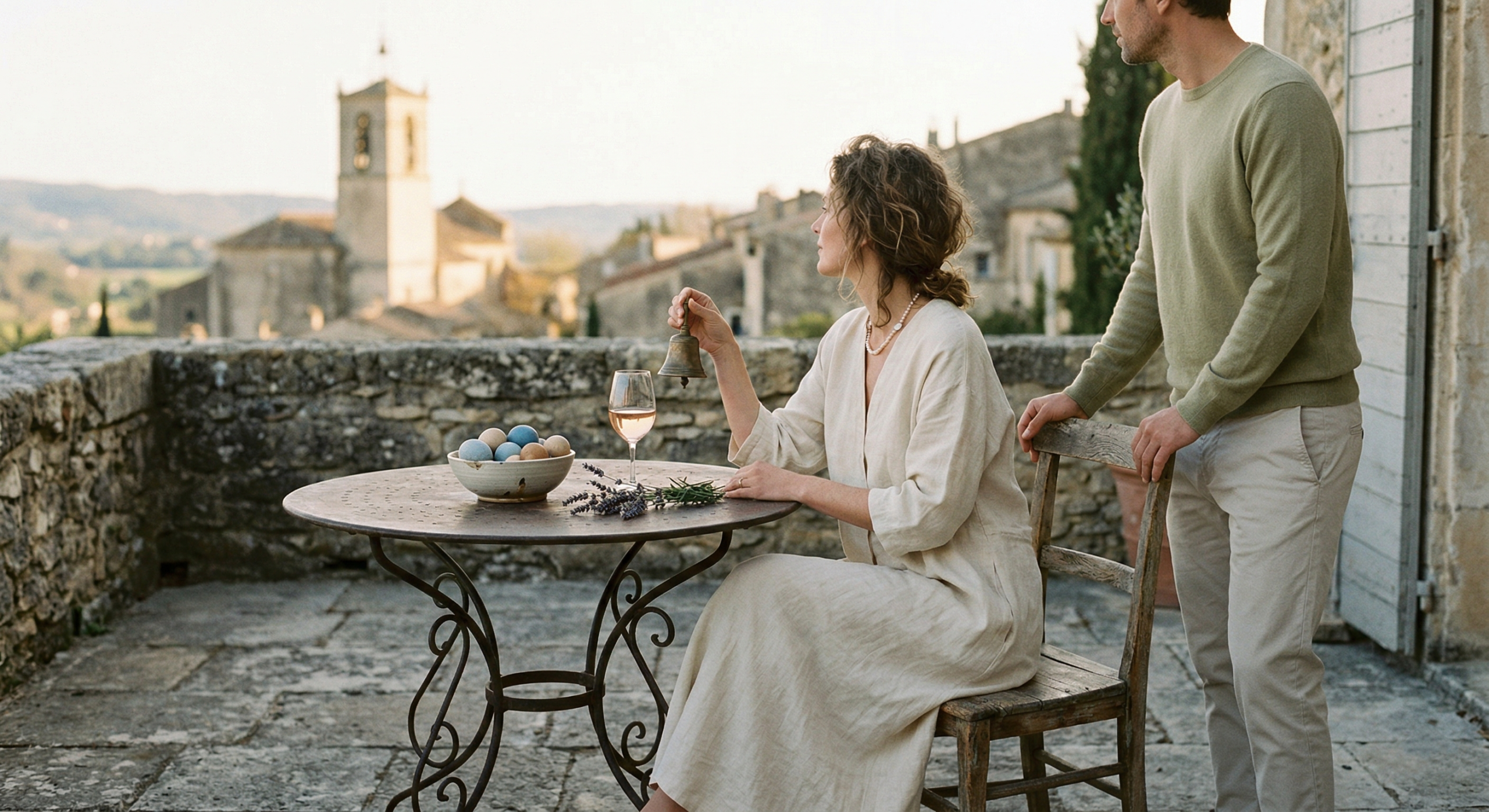
While much of the world looks for a rabbit, the French look to the sky for Les Cloches de Pâques. According to tradition, church bells across the country fall silent on Maundy Thursday to mourn, only to “fly” to Rome to be blessed.
They return on Sunday morning, soaring over French gardens and dropping handcrafted chocolates for children to discover.
This touch of magic realism defines the French spirit. A beautiful blend of sacred history and whimsical storytelling that bypasses the clichés of modern retail.
While globalization has introduced the Lapin de Pâques (mostly via the German influence in Alsace), the Flying Bells remain the ultimate mark of an authentic French upbringing. If you are gifting a host, a bell-shaped chocolate from a heritage chocolatier like À la Mère de Famille shows a far deeper understanding of our culture than a simple bunny.
Haute Chocolaterie: When Easter Eggs Become Sculptural Art
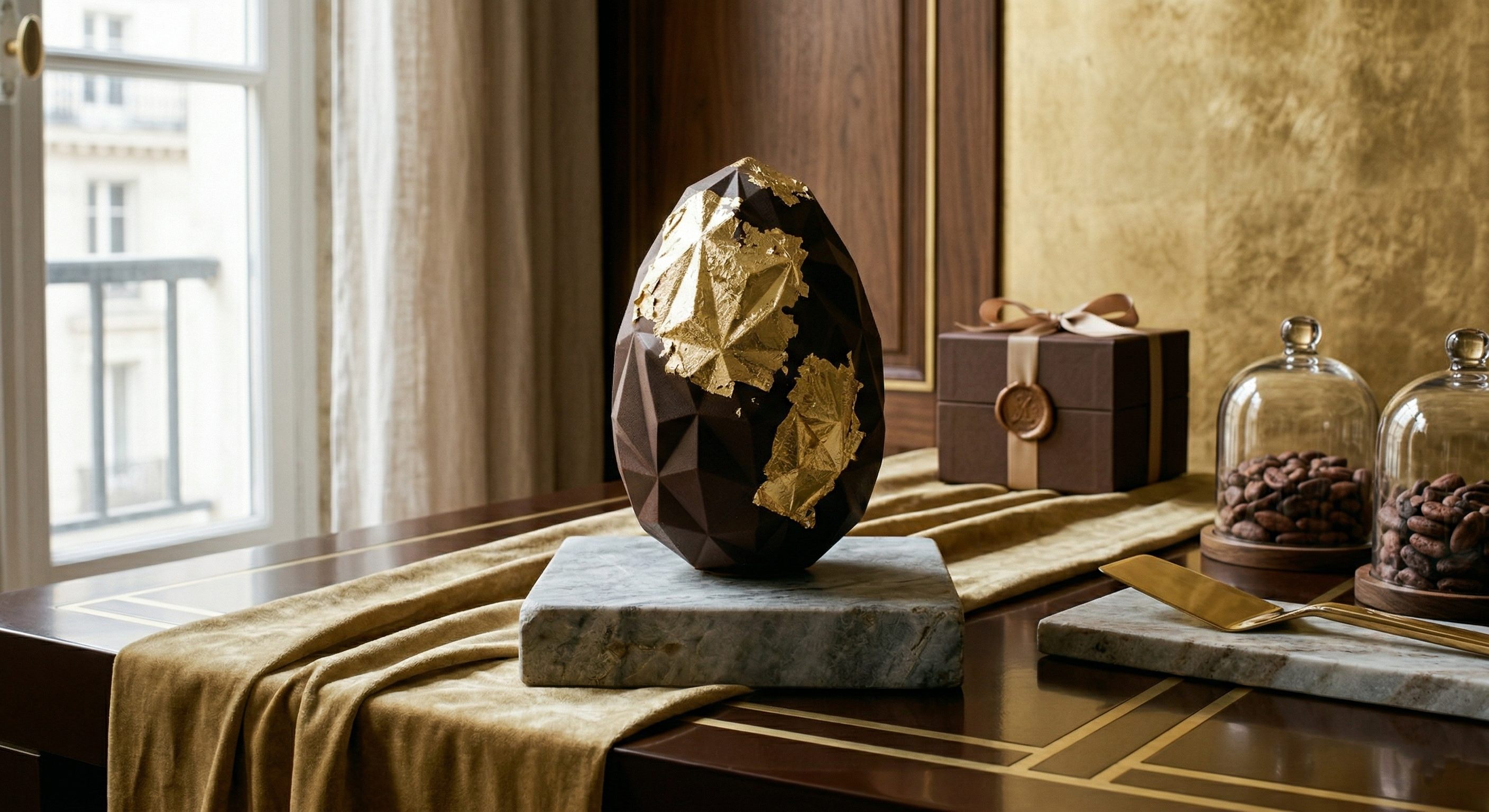
In the weeks leading up to the holiday, the windows of Saint-Germain-des-Prés transform into the world’s most delicious art galleries.
Here, Easter is the season of the Collection Egg, limited-edition masterpieces crafted by top pastry chefs like Cédric Grolet or the ateliers of Alain Ducasse.
These are not merely sweets. They are ephemeral sculptures of dark ganache, gold leaf, and architectural precision.
Investing in a singular, high-quality chocolate creation is the epitome of the “quality over quantity” philosophy that defines the French “Upper Middle Class” aesthetic.
The Hunt (La Chasse aux Œufs)
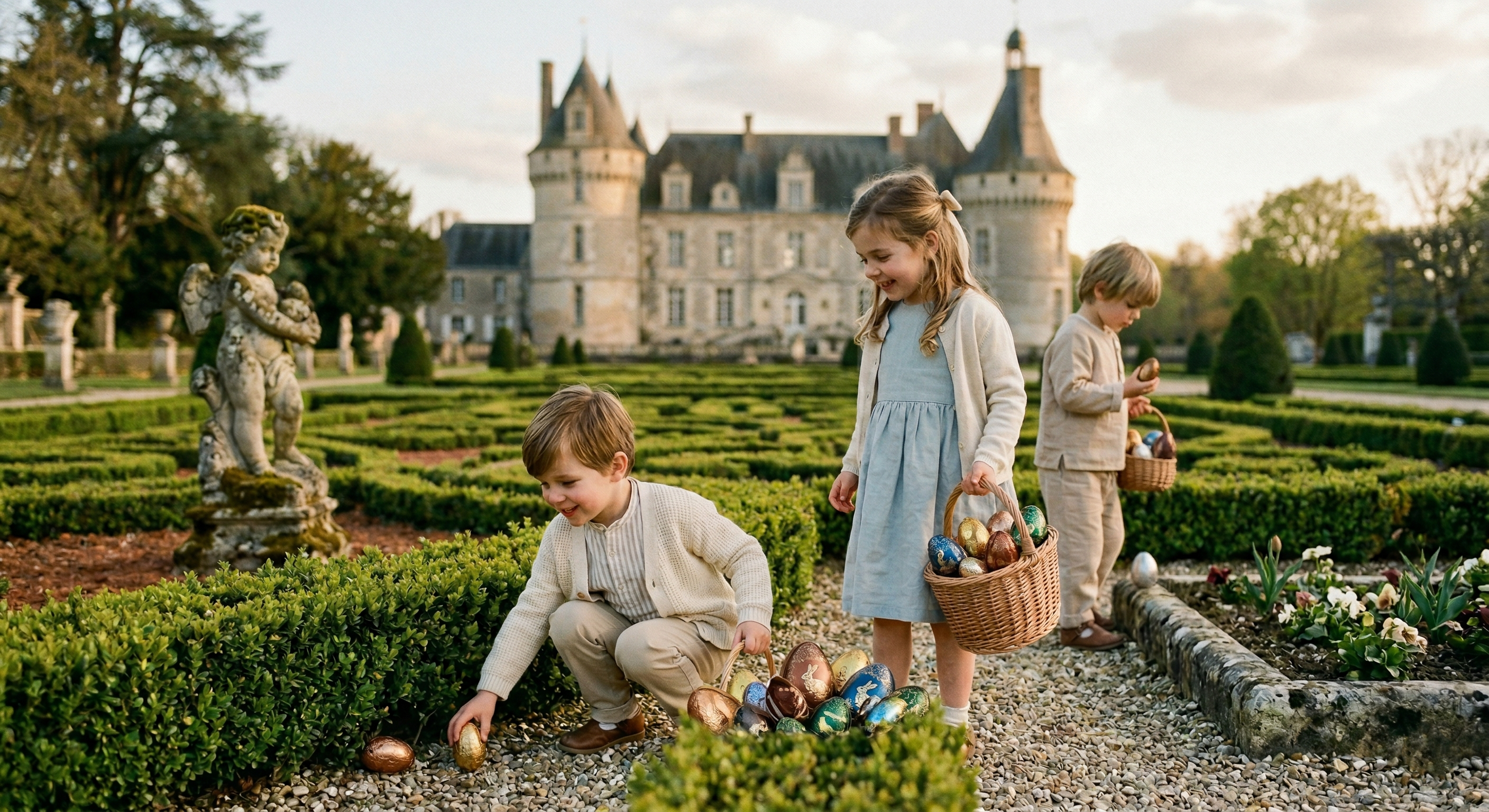
The French Chasse aux Œufs is an exercise in elegance, often set against the backdrop of a manicured Jardin à la française.
For those in search of the ultimate 2026 experience, the grand hunts at Vaux-le-Vicomte or the gardens of the Palais-Royal offer a perfect blend of child-like wonder and aristocratic prestige.
Picture well-dressed families in sustainable linen and neutral tones, searching for treasures hidden among boxwood hedges and marble statues.
It is a moment of community and connection, where the beauty of the surroundings is just as important as the prize itself.
The Easter Feast: A Celebration of Spring Savoir-Faire
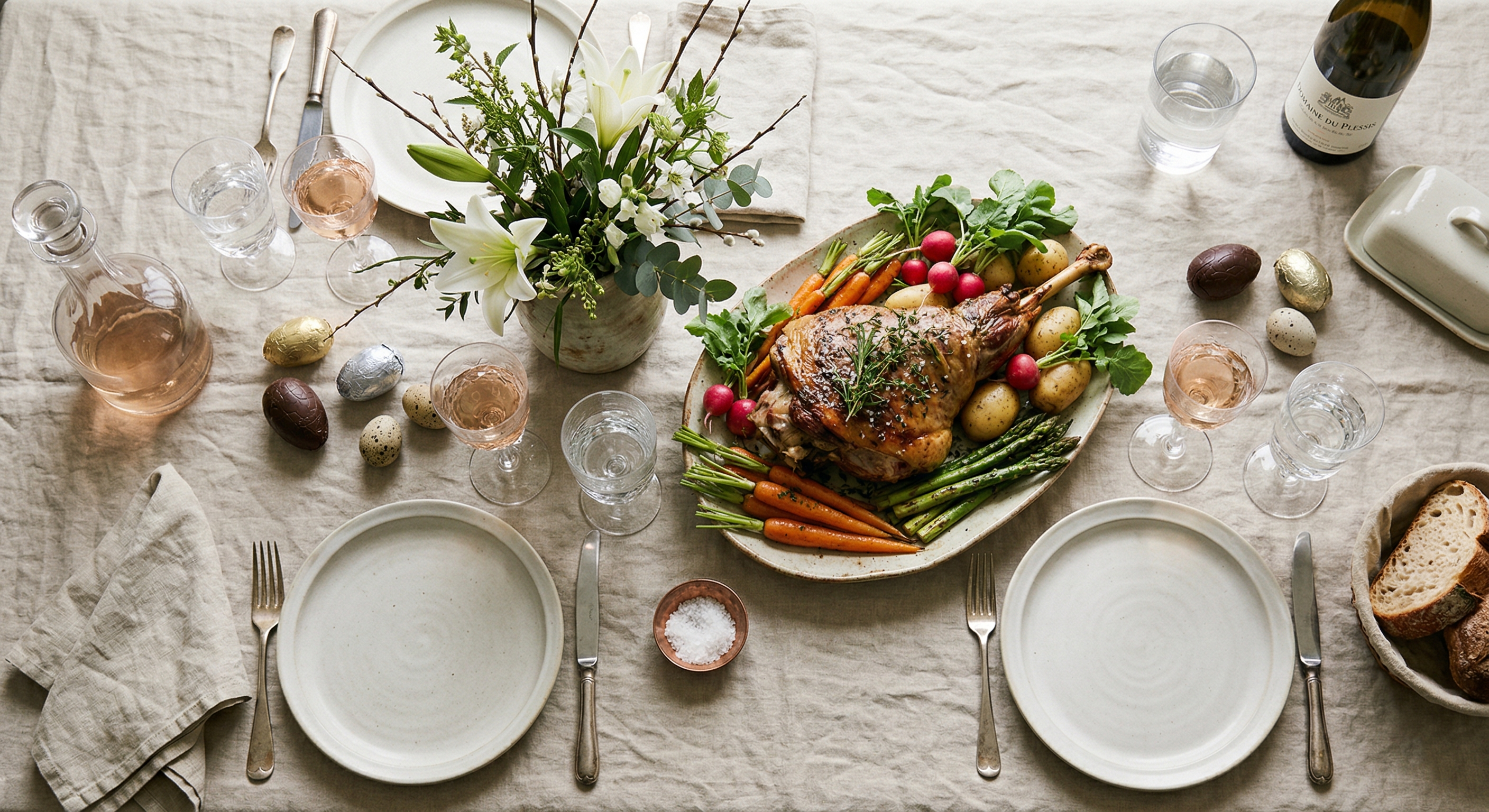
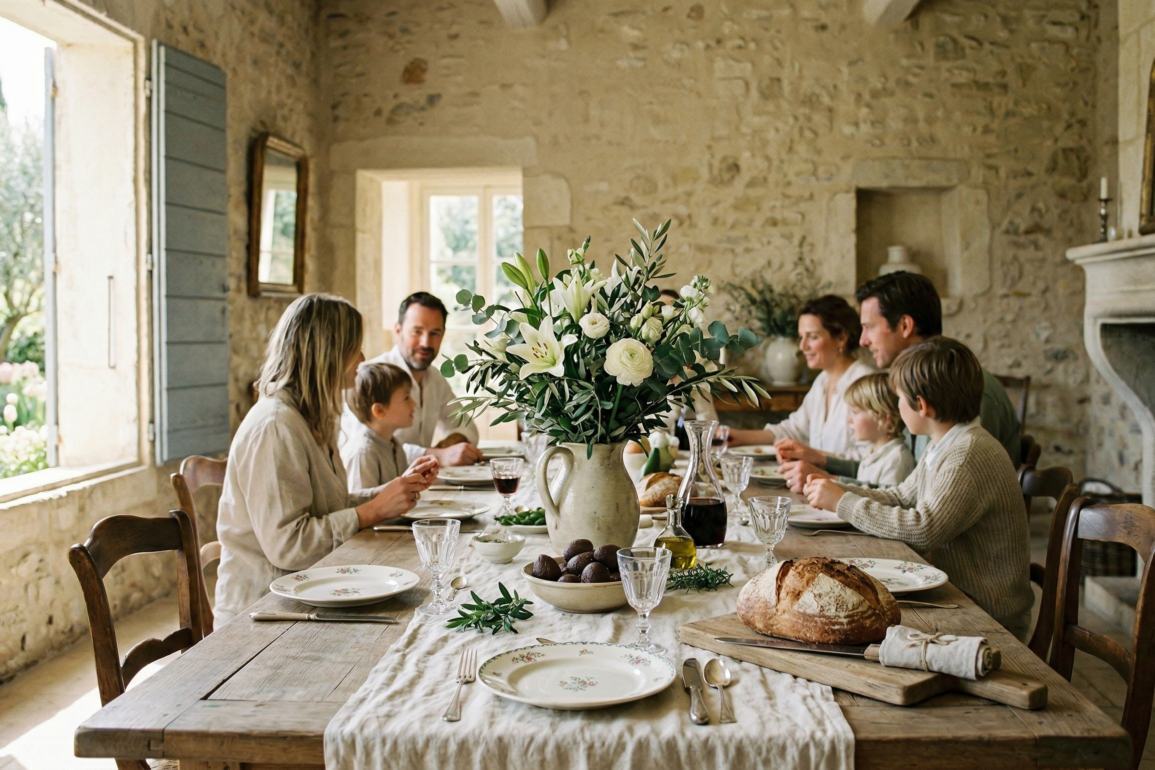
The center of the French home on this Sunday is the table, dressed in vintage family linens and heirloom silver. The traditional menu honors the Gigot d’Agneau (Leg of Lamb), slow-roasted with garlic and rosemary to represent the arrival of spring and ancestral traditions.
Accompanying the lamb are the season’s first primeurs, delicate white asparagus and tender peas that taste of the waking earth.
This meal is a slow, multi-course affair that celebrates the Art de la Table, proving that the most luxurious moments are often those spent sharing a bottle of Bordeaux with those we love most during Easter.
The traditional accompaniment to the lamb is the flageolet bean. While classic, many modern Parisians now opt for a herb-crust presentation with a side of morels to lighten the dish. To truly impress your guests, ensure your centerpiece features real lily of the valley or spring tulips rather than anything synthetic.
As we look forward to the rebirth of spring, I find myself returning to the simple elegance of these rituals that have stood the test of time.
Tell me, are you planning to incorporate a touch of French tradition into your Easter table this year?