

French Country Kitchen
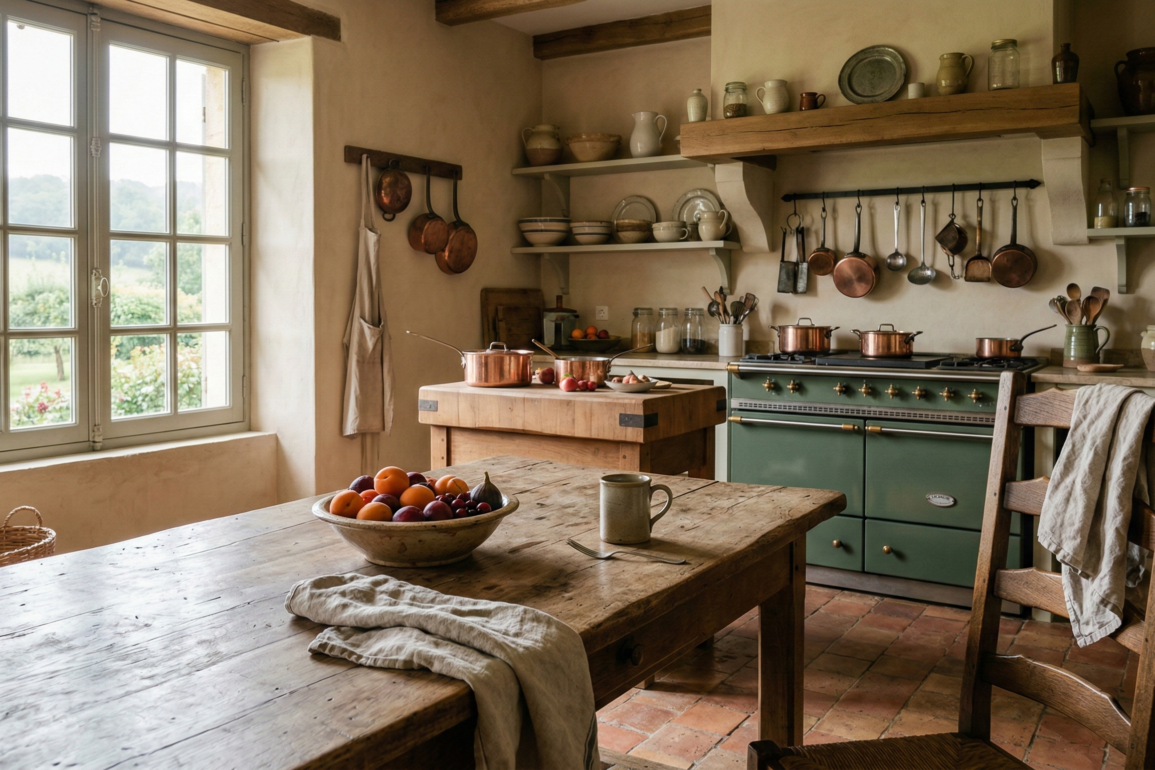
The 2026 french country kitchen prioritizes Refined Provincialism over “Shabby Chic” clichés. Key elements include natural materials like Pierre de Bourgogne limestone, Zellige tile backsplashes, and professional-grade Lacanche ranges. Avoid matching hardware; instead, mix unlacquered brass with iron for an evolved look. Focus on functional luxury and reclaimed materials to create a timeless, sustainable heart of the home.
The Modern French Country Kitchen: A 2026 Guide to Timeless Art de Vivre
Imagine the scent of crushed rosemary and sun-warmed thyme wafting through a room bathed in the soft, milky light of a Loire Valley morning.
There is a specific tactile pleasure in resting your hands on a cool, honed limestone counter while the quiet hum of a professional range promises a slow-cooked feast.
This is the soul of a true french country kitchen, a space that prioritizes the ritual of living over the artifice of ‘decorating,’ building upon the core principles of french country interior decorating.
In 2026, the most significant mistake one can make is confusing “country” with “cluttered.” We are moving far away from the dusty “Shabby Chic” era of the early 2000s; today’s aesthetic is rooted in Refined Provincialism.
It is a curated balance of rugged, historical textures and sleek, functional luxury designed for a modern host who values heritage over trends.
Beyond the Cliché: Curation over Clutter
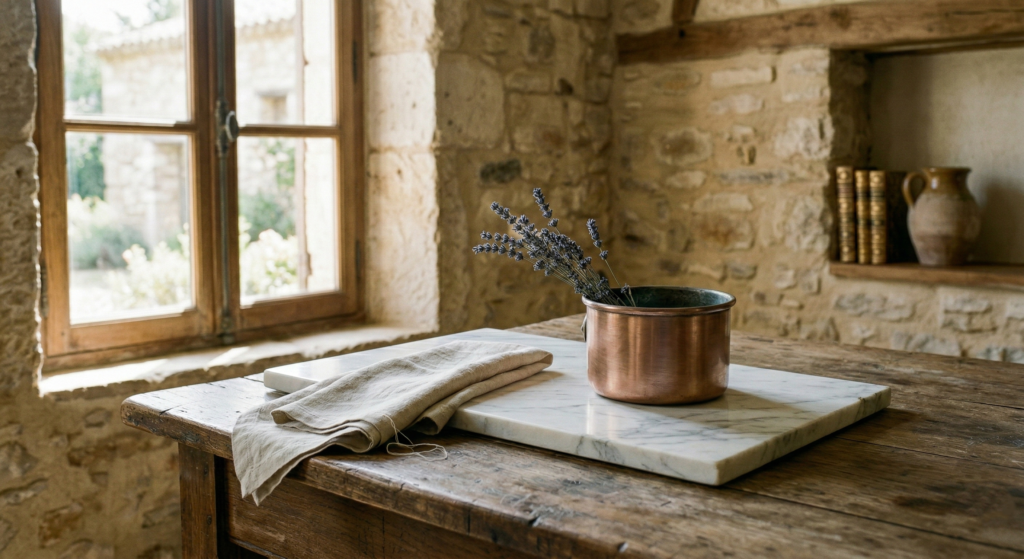
The quintessential french country kitchen of 2026 has shed the kitschy roosters and distressed faux-finishes of the past. Instead, we are seeing a shift toward Quiet Luxury, where every object serves a purpose and carries a story.
It is about “The Edit”, knowing when to let a single, oversized antique copper pot stand alone on a shelf rather than crowding the space with trinkets.
Architecturally, we are moving toward high-contrast materiality.
Think of the juxtaposition between a rough-hewn, reclaimed oak beam and the silky, luminous finish of a Calacatta marble backsplash.
This tension creates a space that feels both grounded in history and effortlessly contemporary.
In a true Parisian or provincial home, the “Island” is rarely a built-in block of cabinetry. To achieve an authentic look, source a “billot” (a heavy-duty antique butcher block) or a long, narrow 19th-century farm table. This allows the kitchen to feel like a living room rather than a laboratory.
The Holy Trinity: Stone, Wood, and Fire
To build a kitchen that ages gracefully, one must invest in living materials that develop a patina over time. For flooring, we are bypassing generic porcelain for Pierre de Bourgogne (Burgundy limestone).
This stone is incredibly dense and features subtle fossil imprints that whisper of history, much like the ancient walls you’ll find inside Mont Saint-Michel, France.
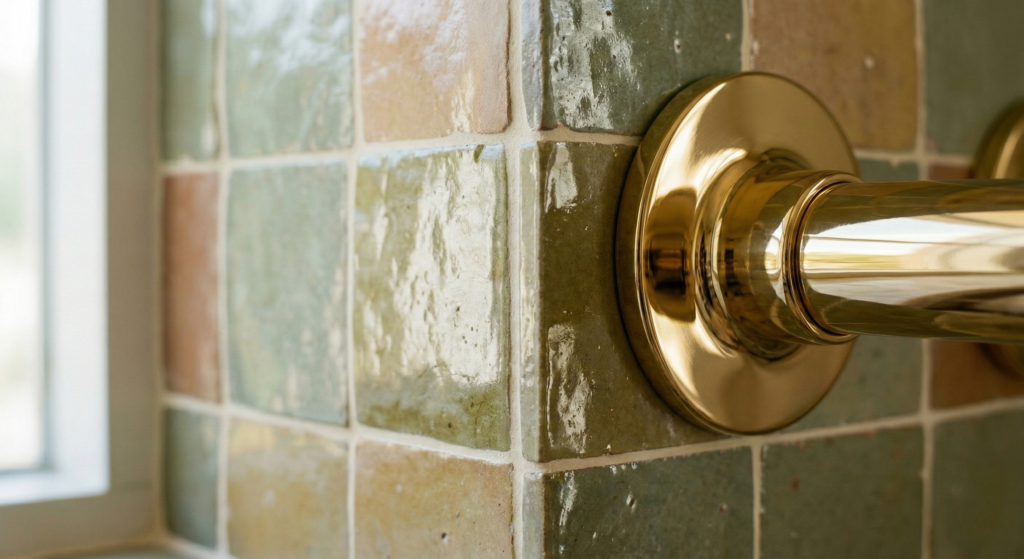
For the walls, the 2026 trend favors Zellige tiles, hand-pressed terracotta from North Africa that has been a staple in Mediterranean French homes for centuries.
Their slight imperfections catch the light in a way that flat, machine-made tiles never could.
Finally, the heart of the home must be the French Range.
Whether you choose the customizable jewelry-like colors of a Lacanche or the industrial prowess of a La Cornue, this is your primary investment piece.
These ranges aren’t just appliances; they are the “fire” around which the entire home breathes.
Styling with “L’Esprit Parisien”
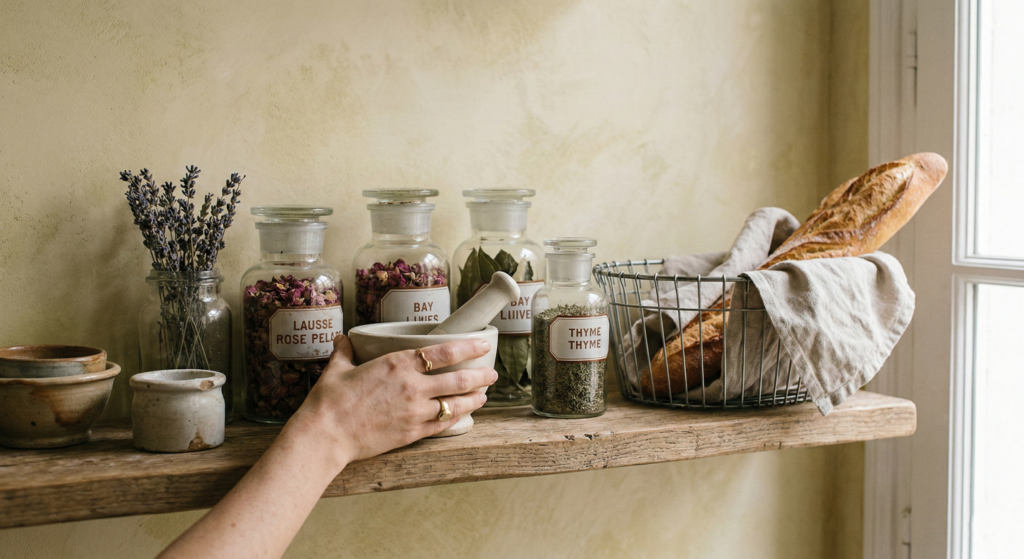
If you want your home to feel like a Parisian expat’s retreat, you must master the art of the unmatched finish. A common mistake is selecting a “hardware package” where every handle and faucet is the same polished chrome.
Instead, mix your metals. Pair an unlacquered brass faucet, which will darken and dull beautifully with use, avec stainless steel appliances and perhaps hand-forged iron pulls on your pantry doors.
This creates an evolved aesthetic, suggesting the kitchen was assembled over decades rather than ordered from a catalog in a single afternoon.
The 2026 Sustainability Twist: Reclaimed Luxury
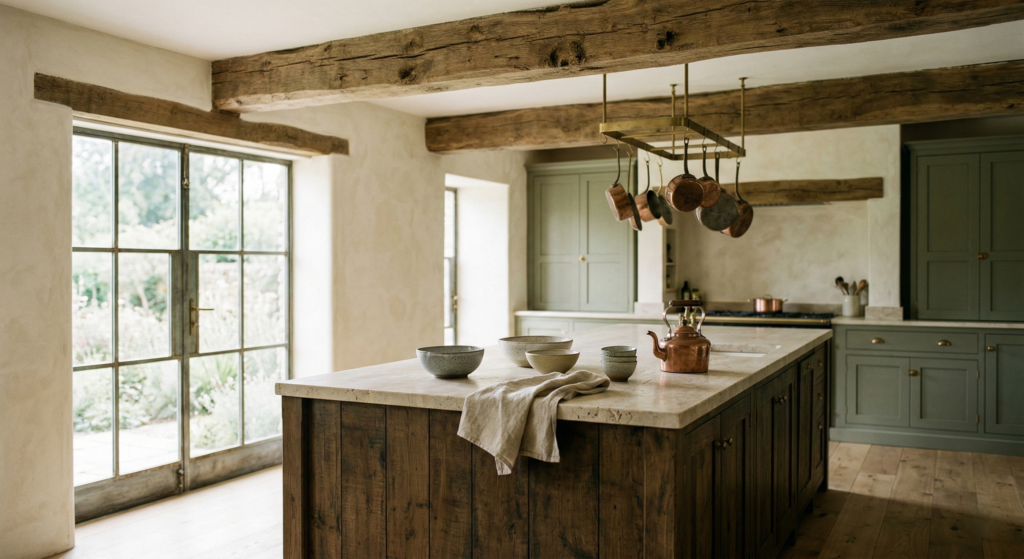
In 2026, the ultimate status symbol isn’t something brand new; it’s something saved. We are seeing a massive resurgence in the use of reclaimed 18th-century oak and Tomette terracotta tiles.
Choosing reclaimed materials is an ethical nod to the environment and a stylistic nod to durability.
When you walk across a floor that has already survived two hundred years, you aren’t worried about a small scratch or a wine spill.
In fact, in France, we believe those marks of life only add to the beauty of a french country kitchen.
How do you plan to balance modern convenience with old-world soul in your next renovation?