



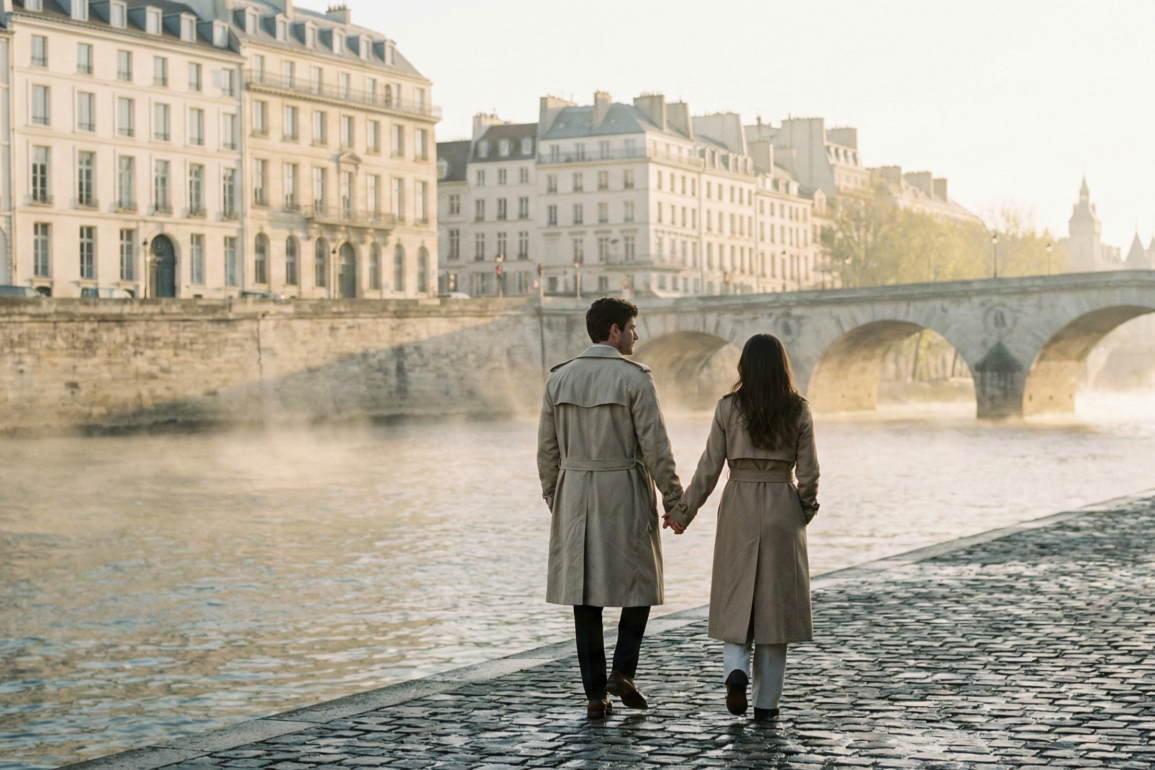
City of Love, Paris, France
Paris earned the title “City of Love” primarily during the 19th-century Romanticism era, attracting poets and artists who idealized emotion. Today, its intimate Haussmannian architecture, the scenic Seine River, and landmarks like the Wall of Love sustain this reputation. It remains a global symbol for romance, dining, and public affection.
Beyond the Cliché: Why is Paris the City of Love (France) & How to Experience It?
Imagine the soft glow of gas lamps reflecting on wet cobblestones, the distant sound of a jazz trumpet in Saint-Germain, and the hush of a private courtyard.
Paris isn’t just a destination; it is a mood.
While the world knows it by its famous moniker, the City of love paris france offers far more than just a backdrop for honeymoon photos.
It is a place where history, art, and an unapologetic celebration of beauty converge to create an atmosphere that feels universally romantic.
But is this reputation earned, or is it simply brilliant marketing?
Let’s peel back the layers of the cliché to discover the authentic romance of the capital.
I. The Historical Roots: How Paris Became the Romantic Capital
Paris didn’t wake up one day deciding to be the capital of romance. This identity was forged through centuries of artistic rebellion and emotional expression.
The Influence of the Romanticism Era (19th Century)
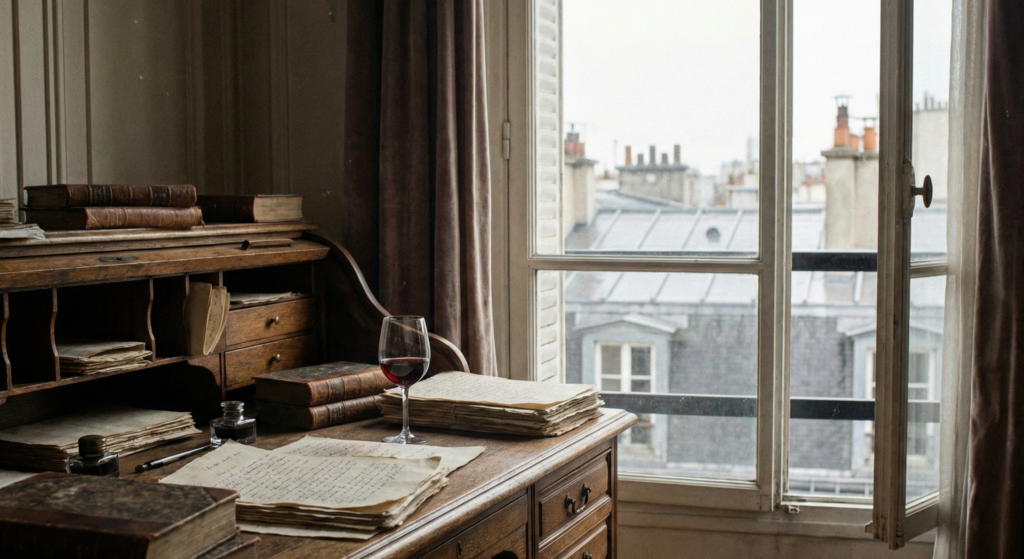
The heartbeat of Parisian romance began in the 19th century.
This was the era of Romanticism, a movement where poets like Victor Hugo and Baudelaire, alongside painters like Delacroix, rejected pure logic in favor of deep emotion. They championed the idea that to feel, intensely and passionately, was the highest form of existence.
The “I Love You” Wall (Le Mur des Je t’aime)
While history set the stage, modern Paris continues the dialogue. Hidden in a small garden in Montmartre lies the Wall of Love, a mesmerizing work of art featuring the phrase “I love you” written 311 times in 250 languages.
It is a quiet reminder that in this city, love is the universal language.
While the world calls it the “City of Love,” we locals actually refer to Paris as La Ville Lumière (The City of Light). To truly blend in, seek out the “Blue Hour” (l’heure bleue) that fleeting moment at twilight when the sky turns deep indigo and the streetlights just flicker on. It is scientifically the most flattering, romantic light you will ever experience.
II. The Aesthetics of Romance: Architecture and Atmosphere
Romance in Paris is structural.
It is built into the limestone and forged in the iron balconies that line the boulevards.
The Haussmannian Architecture & Golden Lights
There is a soothing rhythm to the city thanks to Baron Haussmann. The uniformity of the creamy limestone buildings and slate gray roofs creates a sense of harmony.
At night, the city is bathed in a warm, golden hue, purposefully designed to soften edges and invite intimacy.
The Seine River and its Bridges
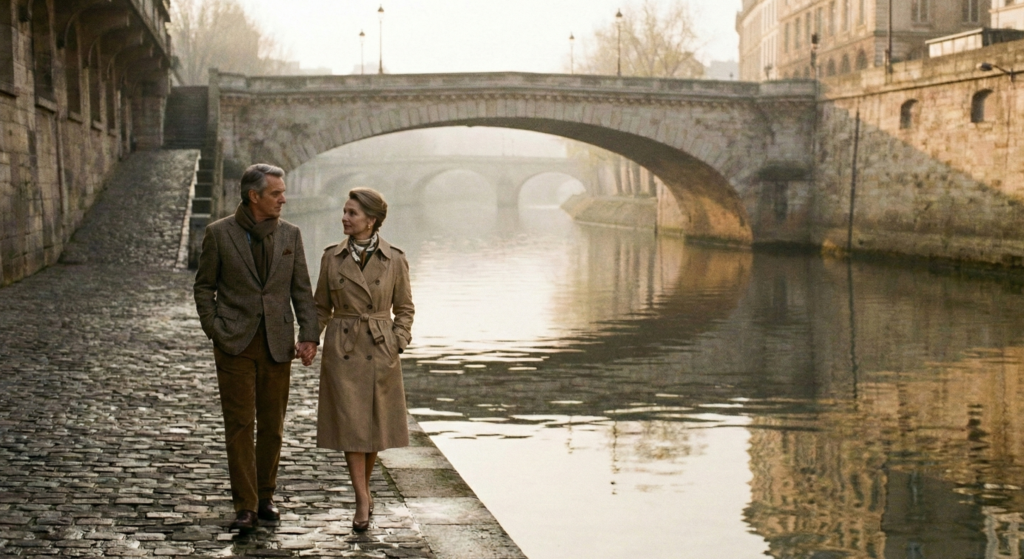
The Seine is the artery of the city. Strolling along the riverbanks, you are literally walking through history. The reflection of the monuments on the water creates a dreamlike quality that separates you from the rush of the modern world.
The Legend of the Pont des Arts (Love Locks)
For years, the Pont des Arts groaned under the weight of thousands of “love locks.” While the city removed them to protect the bridge’s structural integrity, the bridge remains a stunning pedestrian walkway. The romance here isn’t in the padlock anymore; it’s in the unobstructed view of the Louvre and the breeze off the river.
Want to bring that romantic atmosphere home? Here is how to start creating a Parisian flat in any modern house.
III. Culinary Romance: Why Food is Love in Paris
In France, we do not eat simply to survive: we eat to commune.
The table is a sacred space for couples.
The Art of the Tête-à-tête
Parisian bistros are designed with small, round tables that force you to lean in. This proximity creates a tête-à-tête (literally “head-to-head”) atmosphere, ensuring that your conversation remains private and intimate, even in a crowded room.
Aphrodisiacs & Fine Dining
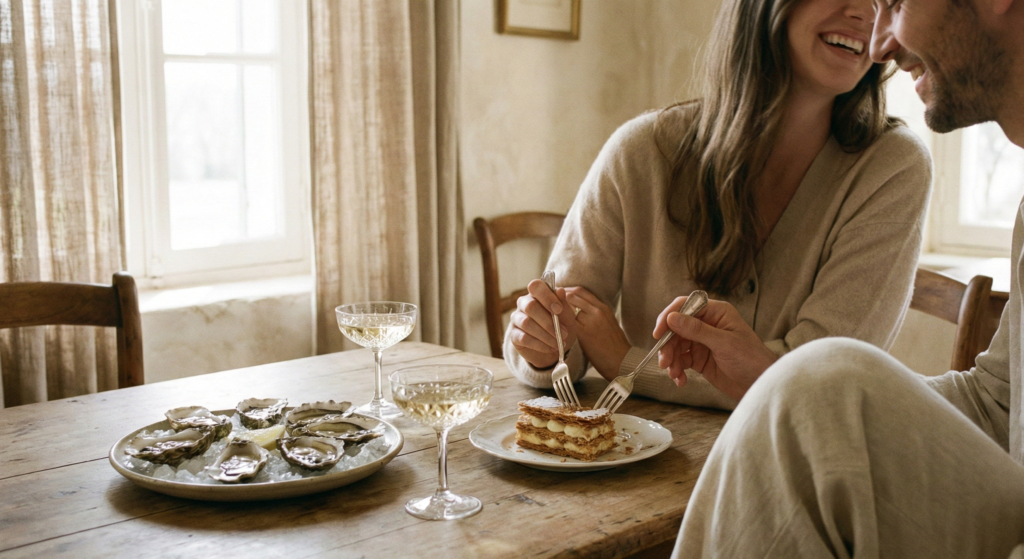
From briny oysters accompanied by crisp Champagne to the ritual of sharing a Mille-feuille, French cuisine is inherently sensual. It prioritizes quality ingredients and the slow enjoyment of time the ultimate luxury in a busy relationship.
IV. Iconic Spots to Feel the Love (Tourist Essentials)
Sometimes, the classics are classics for a reason.
However, the key is knowing how to experience them.
Sunset at the Eiffel Tower
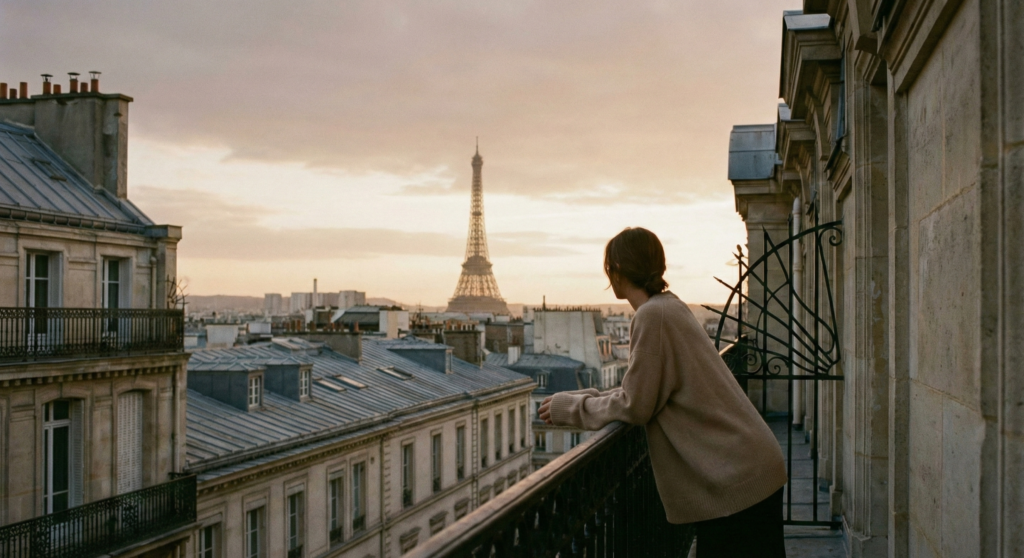
Yes, it is expected, but watching the Iron Lady sparkle on the hour is undeniable magic. For a more sophisticated experience, skip the lawn picnics and book a table at a restaurant with a view, like Girafe or Les Ombres, to enjoy the spectacle with a glass of vintage wine.
Strolling through Montmartre
With its winding streets and village vibe, Montmartre feels worlds away from the metropolis. It is the perfect place to get lost together.
Avoid the Place du Tertre at noon; it is a tourist trap. Instead, walk down Rue des Saules behind the Sacré-Cœur to see the secret vineyard, Clos Montmartre. It’s quiet, historic, and utterly charming.
V. Hidden Gems: Where to Find Romance Without the Crowds
True “Old Money” travelers know that privacy is the ultimate romantic gesture. Step away from the masses.
The Covered Passages (Passages Couverts)
Travel back in time in the Galerie Vivienne or Passage des Panoramas. These 19th-century glass-roofed arcades are filled with antique bookshops and tearooms. They offer a hushed, cozy shelter, especially on rainy days.
Secret Gardens & Museums
Escape to the Musée de la Vie Romantique (Museum of Romantic Life). Tucked away at the end of a tree-lined alley, this former home of painter Ary Scheffer offers a lush, secret greenhouse café that feels like a private estate in the countryside.
VI. Modern Pop Culture: Is Paris Still the City of Love?
Does the modern reality live up to the glossy screens of Netflix?
The “Emily in Paris” Effect
Pop culture has reignited a global fascination with Parisian romance. While the show captures the city’s beauty, it often glosses over the grit. Real Parisian romance is less about flashy outfits and more about quiet confidence and authentic connection.
Reality vs. Expectations
Paris is a real, functioning metropolis. It can be noisy and gritty. However, if you embrace the “flâneur” mindset, wandering without a goal, you will find the magic is very real. It is found in the small details, not just the grand gestures.
VII. Planning Your Romantic Getaway to Paris
To ensure your trip is seamless, timing and location are everything.
Best Time of Year for Couples
For blooms and mild weather, choose late April or May. For a cozy, “hygge” vibe with roasted chestnuts and Christmas lights, December is unmatched. Avoid August, as many authentic shops close for the holidays.
Where to Stay (Romantic Districts)
Le Marais (3rd/4th Arr.):
For couples who love history, boutiques, and vibrant nightlife.
Saint-Germain-des-Prés (6th Arr.):
The quintessential choice for literary lovers and classic luxury.
VIII. The Ultimate Proposal Spots in Paris
Looking for the perfect backdrop for a life-changing question?
Square du Vert-Galant:
The very tip of the Île de la Cité, under a weeping willow at water level.
Temple de la Sibylle:
A romantic kiosk perched on a cliff in the Buttes-Chaumont park.
Bir-Hakeim Bridge:
For a cinematic view of the Eiffel Tower framed by iron columns.