


Le Croissant
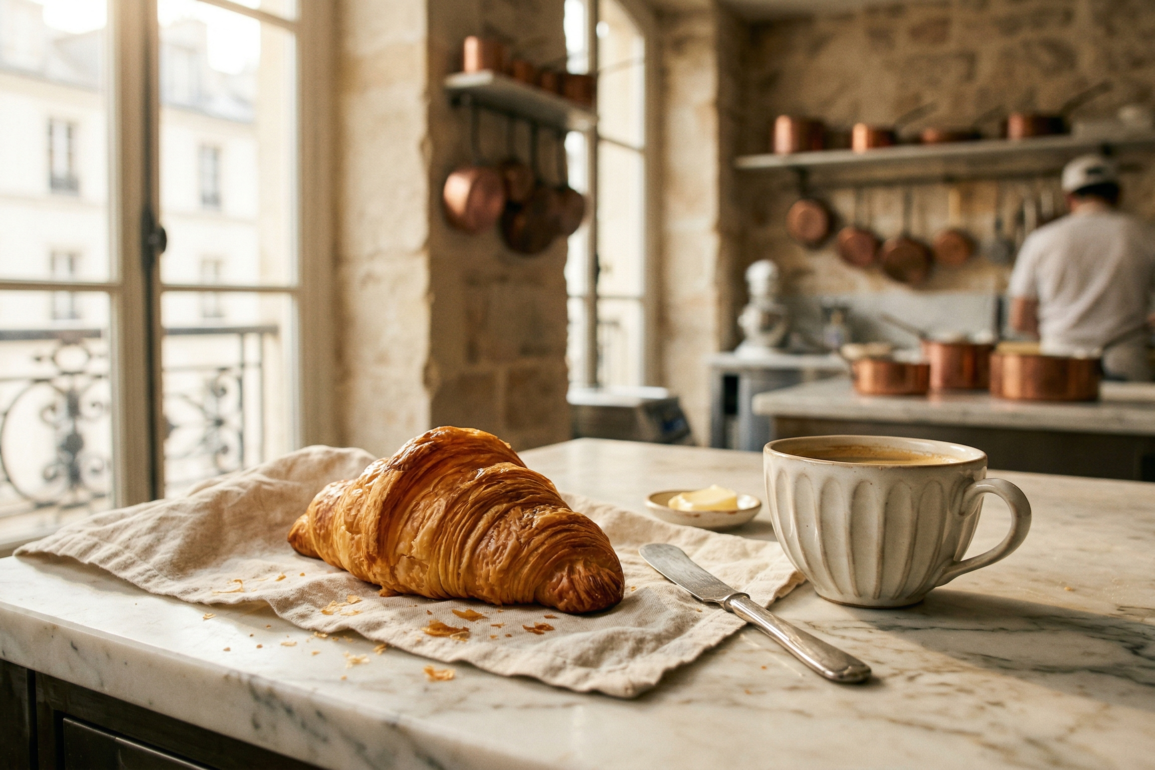
The croissant is the ultimate symbol of French Art de Vivre, representing a commitment to Quiet Luxury and artisanal heritage. Unlike its Austrian ancestor, the Kipferl, the modern flaky croissant was perfected in Paris using advanced lamination techniques. Authentic versions feature a crisp, golden exterior and a light, honeycomb interior, emphasizing quality over quantity.
The Croissant Ritual: Why the World’s Most Famous Pastry is a Lesson in Quiet Luxury
Imagine the blue-grey light of a Parisian dawn filtering through sheer linen curtains.
The city is still whispering, but the air is already heavy with the scent of toasted yeast and high fat butter. You aren’t rushing to a meeting; you are waiting for the first croissant of the morning.
The Morning Manifesto: Elevating the Everyday Through Intentionality
In our hyper accelerated world, the croissant stands as a delicious rebellion. To the true Parisian, it is not a “quick breakfast”, it is a sensory ritual that demands your full attention.
While the rest of the world treats coffee as fuel, we treat the morning as an opportunity for intentional living.
The magic lies in the ephemeral nature of the pastry.
It is at its peak for only a few hours after leaving the oven. Choosing to spend your morning with a perfectly laminated pastry is an investment in your own well-being, prioritizing quality over convenience.
More Than a Pastry: The Philosophy of the “Slow Morning”
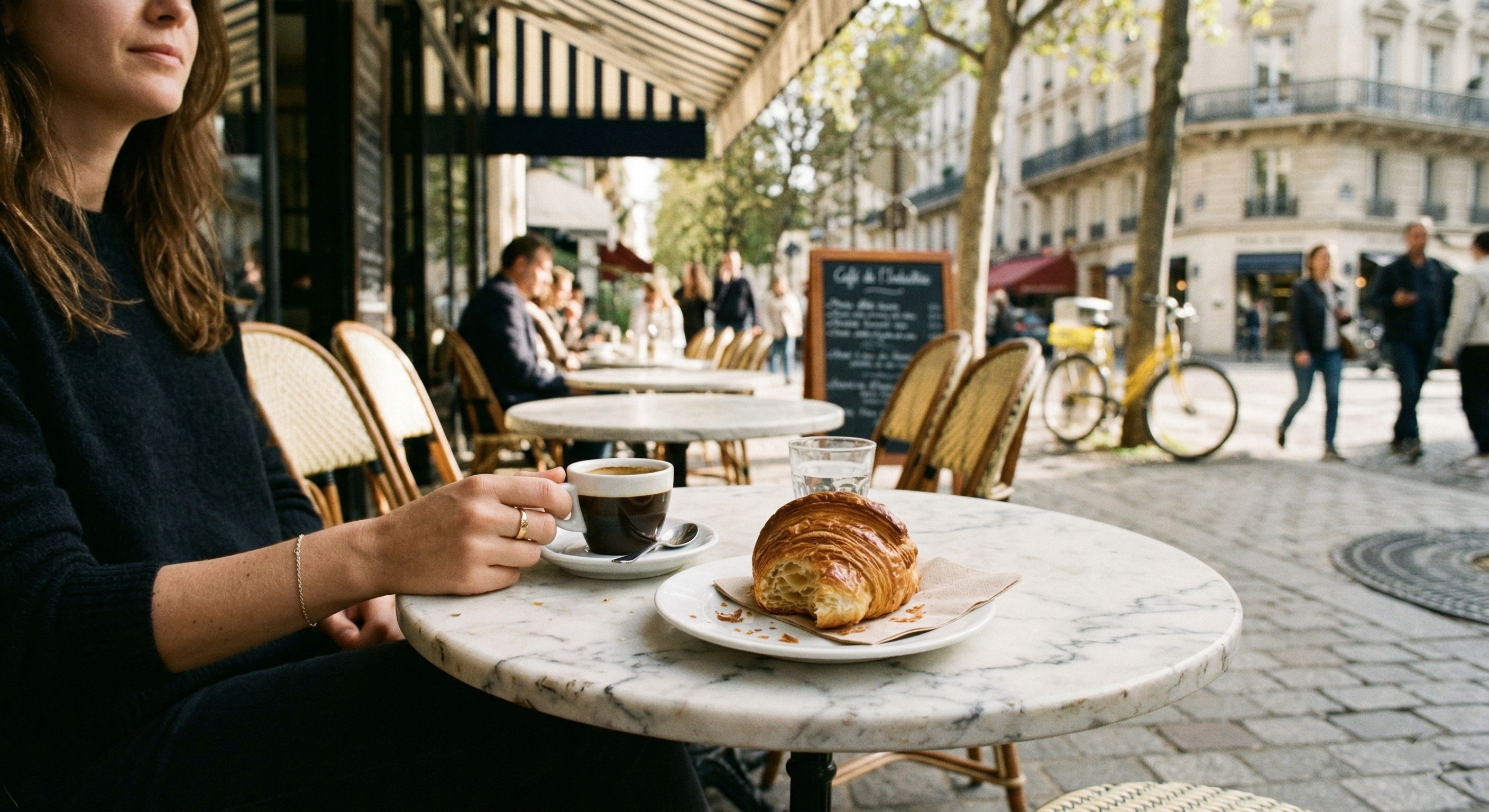
The “grab-and-go” culture is the antithesis of the French Art de Vivre. A croissant should never be consumed while walking or checking emails.
It requires a ceramic plate, perhaps a silver spoon, and the willingness to be still.
We view the morning not as a race to be won, but as a canvas for quiet luxury.
Taking twenty minutes to notice the way the light hits your espresso and the way the pastry flakes under your touch is a radical act of self-care.
Never, under any circumstances, ask for your croissant to be toasted or served with butter and jam. A high-end pastry is already 25% butter; adding more is considered a faux pas that masks the delicate fermentation notes of the dough.
From Vienna to Versailles: The Mythic Origin of Elegance
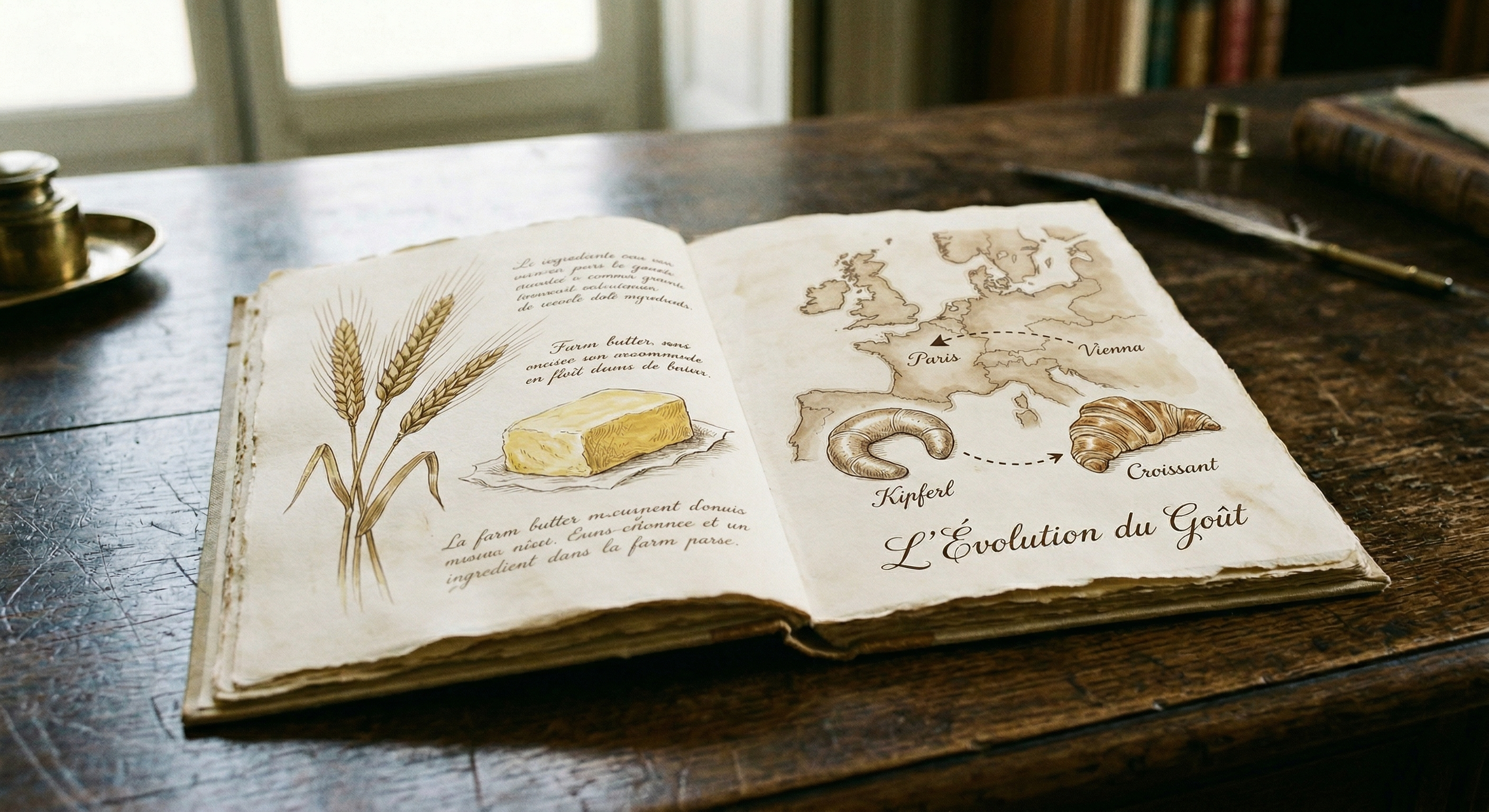
While many claim Marie Antoinette brought the Kipferl from Austria, the croissant as we know it, flaky, buttery, and light, is a purely Parisian evolution.
It was the 1839 opening of the Boulangerie Viennoise that sparked the city’s obsession with viennoiseries.
What began as a dense bread-like crescent evolved into a feat of culinary architecture.
By the early 20th century, French bakers replaced the brioche-style dough with puff pastry, creating the iconic layers that define modern elegance.
The Anatomy of a Luxury Habit
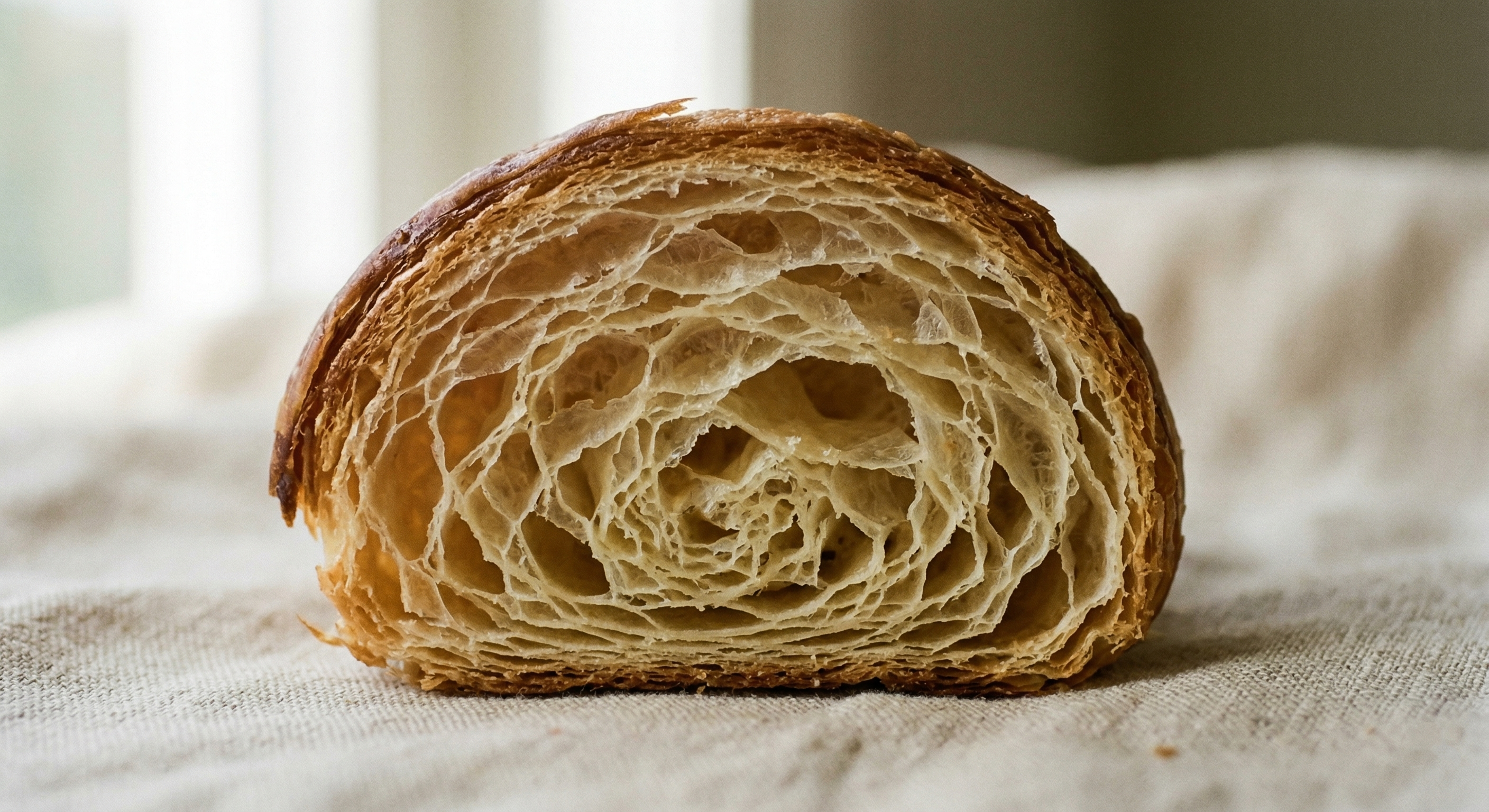
A true artisan croissant is a three-day labor of love. It requires patience, a rare commodity in 2026. The “shatter” you hear when you break the ends is the result of hundreds of microscopic layers of dough and butter, a process known as lamination.
When evaluating quality, look for the honeycomb interior (the alvéolage). It should be airy and translucent, not doughy.
If the bottom of the pastry is greasy, the baker used inferior butter or incorrect temperatures. A luxury pastry leaves a fine dust of golden flakes, never a pool of oil.
The “Guiltless” Calorie: Mindful Indulgence
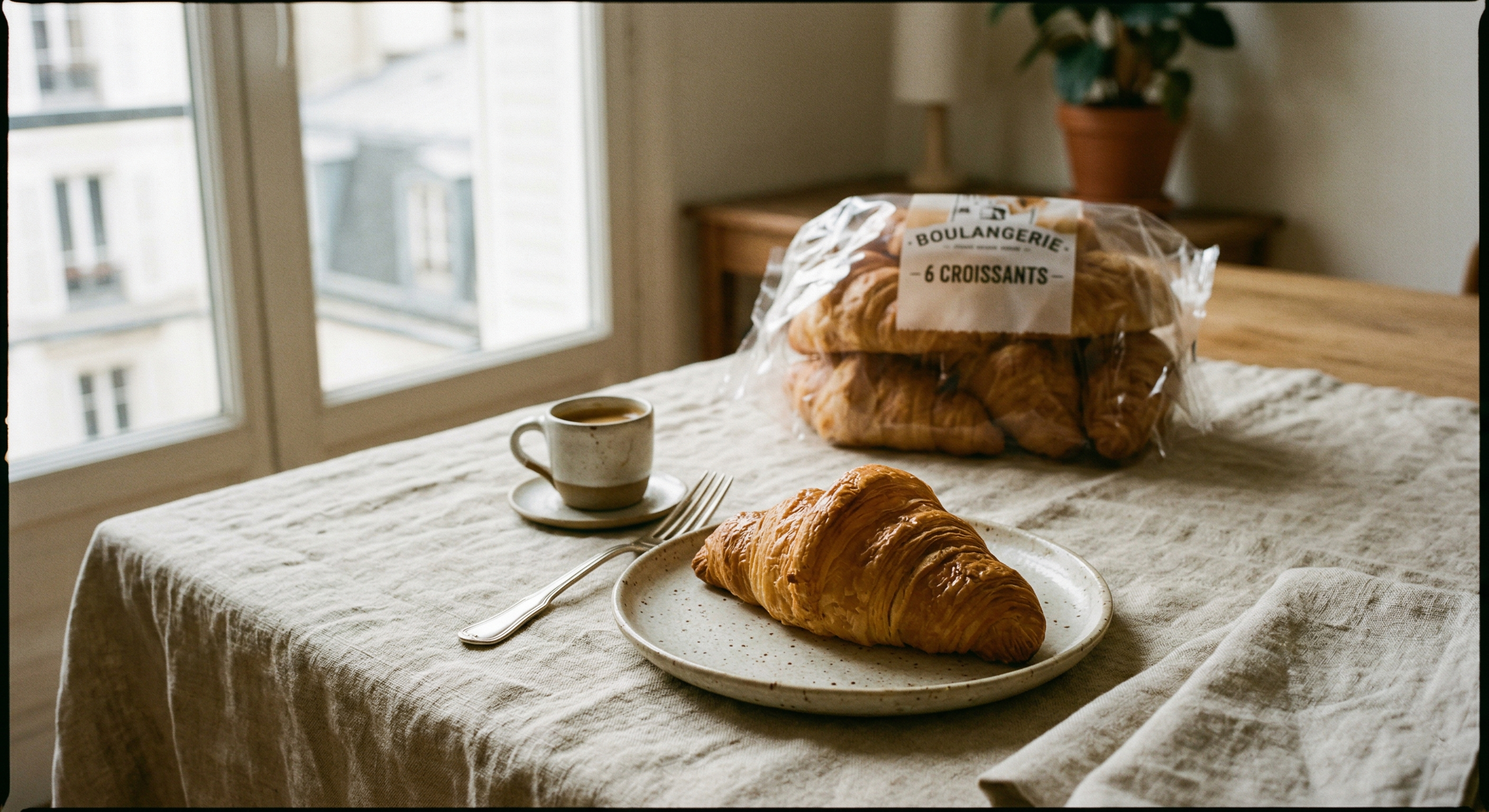
In the spirit of the French Paradox, we believe in eating the best version of something, or not eating it at all.
One €4 hand-crafted croissant made with AOC butter is infinitely more satisfying than a box of six industrial substitutes.
This is the “Cost-per-wear” of the culinary world. By choosing craftsmanship over mass production, you nourish both your body and your appreciation for heritage. It is not about calories. It’s about the integrity of the ingredient.
Creating the Ritual at Home
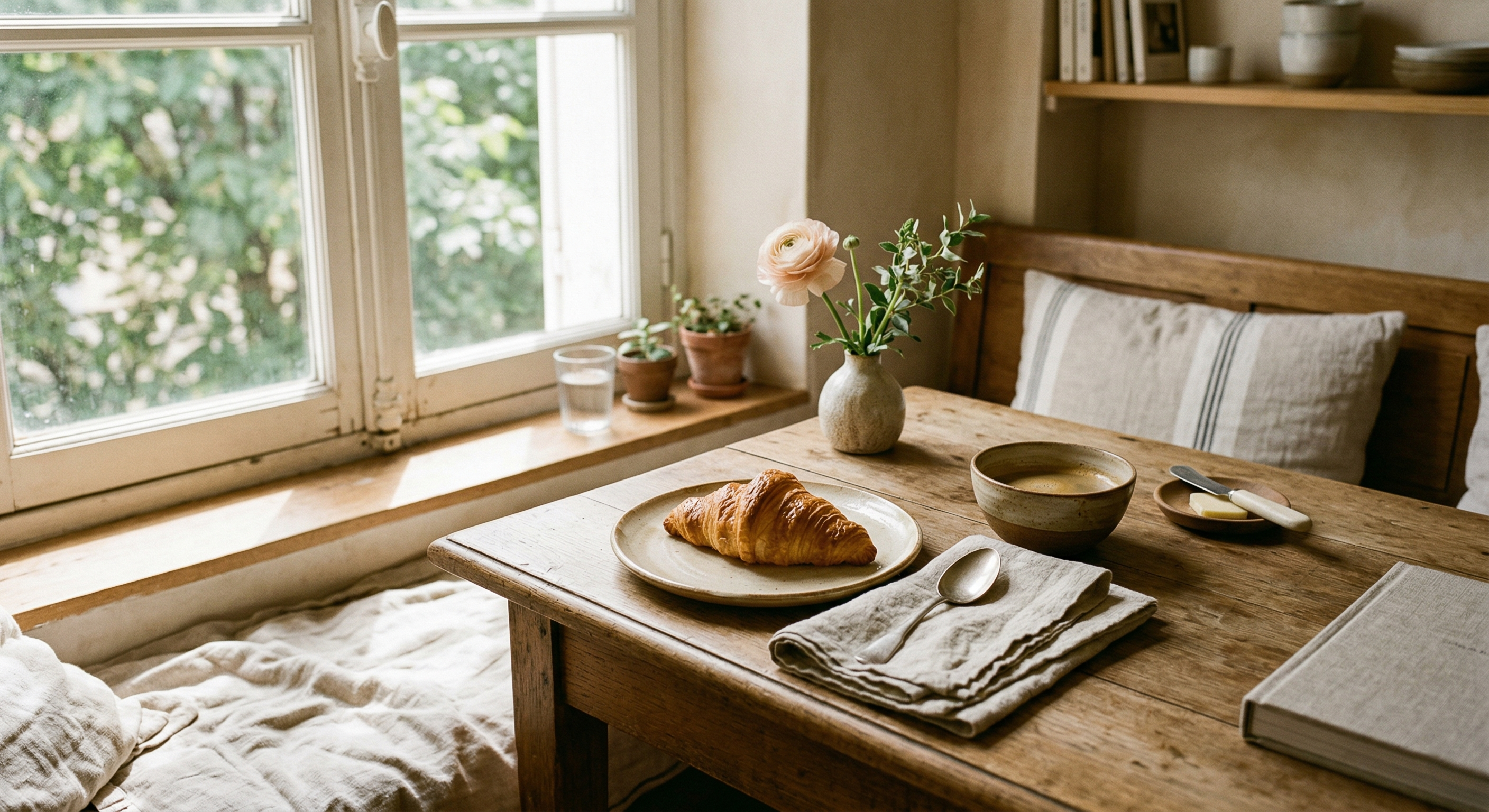
You don’t need to be in the 6th Arrondissement to practice the art of the croissant.
You simply need to curate your environment. Clear your table of tech, lay down a cloth napkin, and use your “good” porcelain.
To truly master the Art de Vivre, pair your morning pastry with the perfect atmosphere by creating a Parisian flat in a modern home.
Elevating your everyday life starts with these small, unhurried moments.
When you finally take that first bite, you aren’t just eating; you are participating in a century old tradition of French excellence.
The perfect croissant is, quite simply, the ultimate expression of living well.
How do you carve out space for your own “Quiet Luxury” rituals in the morning?