

The Return of Pastoral Poetics
The revival of toile de jouy in modern design celebrating the perfect balance between historical storytelling and modern simplicity. Far from being a relic of provincial dust, this iconic print has transformed into a signature of quiet luxury. We explore how to curate this legacy fabric, ensuring its poetic pastoral scenes bring an authentic French elegance to your contemporary estate.
The Pastoral Dream: A Modern Requiem for toile de jouy
A morning mist hangs over the manicured boxwoods, carrying the scent of damp limestone and wild rosemary. Inside the salon, the pale winter light catches the exquisite drapery, revealing fine ink-brushed landscapes that tell silent stories of ancient love. This is the quiet charm of toile de jouy, a textile that transcends simple design.
Today, this beloved French heritage motif undergoes a delicate renaissance. It is no longer about replicating the sensory overload of historical *châteaux*, but rather about mastering the art of subtraction. By inviting these elegant hand-drawn narratives into our living spaces with restraint, we celebrate a lasting testament to craftsmanship and curation.
I. The Genesis of a Masterpiece: From Forbidden Cotton to Royal Favor
The Oberkampf Legacy and the Bièvre River
To understand the soul of toile de jouy, one must return to 1760. Christophe-Philippe Oberkampf established his historic manufacture in Jouy-en-Josas, chosen for the gentle waters of the Bièvre river which washed the printed cottons to unparalleled brightness. This fabric quickly enchanted Marie-Antoinette, transforming humble cotton into the ultimate statement of French courtly elegance.
Why Jouy-en-Josas Became the Epicenter of Style
The village near Versailles became synonymous with artistic freedom and technical innovation. By employing renowned artists, the manufacture elevated simple cloth into fine art, capturing the imaginations of the European elite who craved a romanticized vision of country life.
The Hushed Note
A royal ban on cotton imports in 1686 inadvertently fueled the French obsession with printed textiles. By criminalizing these vibrant imports, the crown created an insatiable underground desire for exotic patterns, setting the stage for Oberkampf’s royal triumph centuries later.
II. Decoding the Aesthetic: The Grammar of Rural Romance
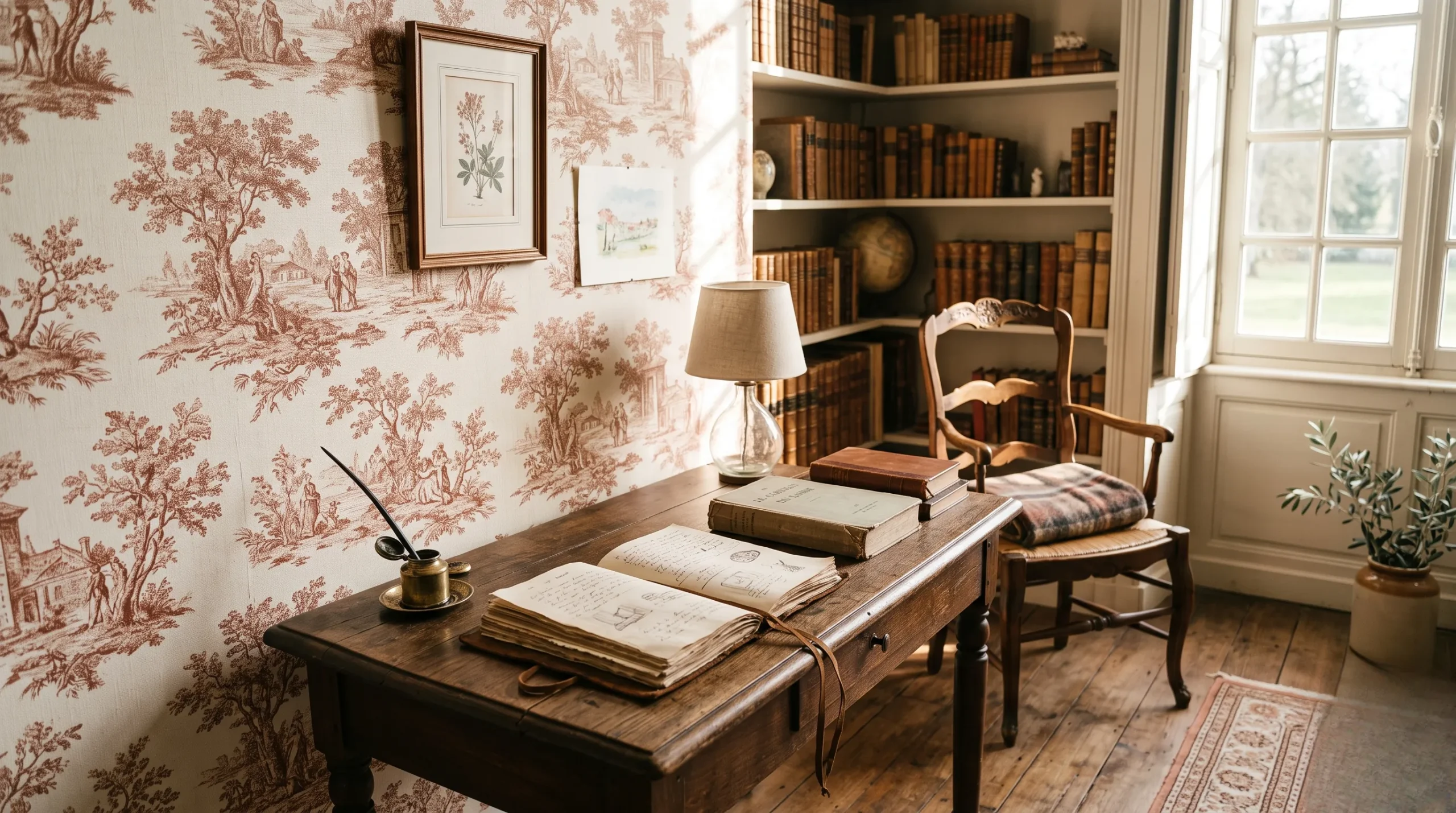
Monochromatic Poetry: Beyond Classic Blue
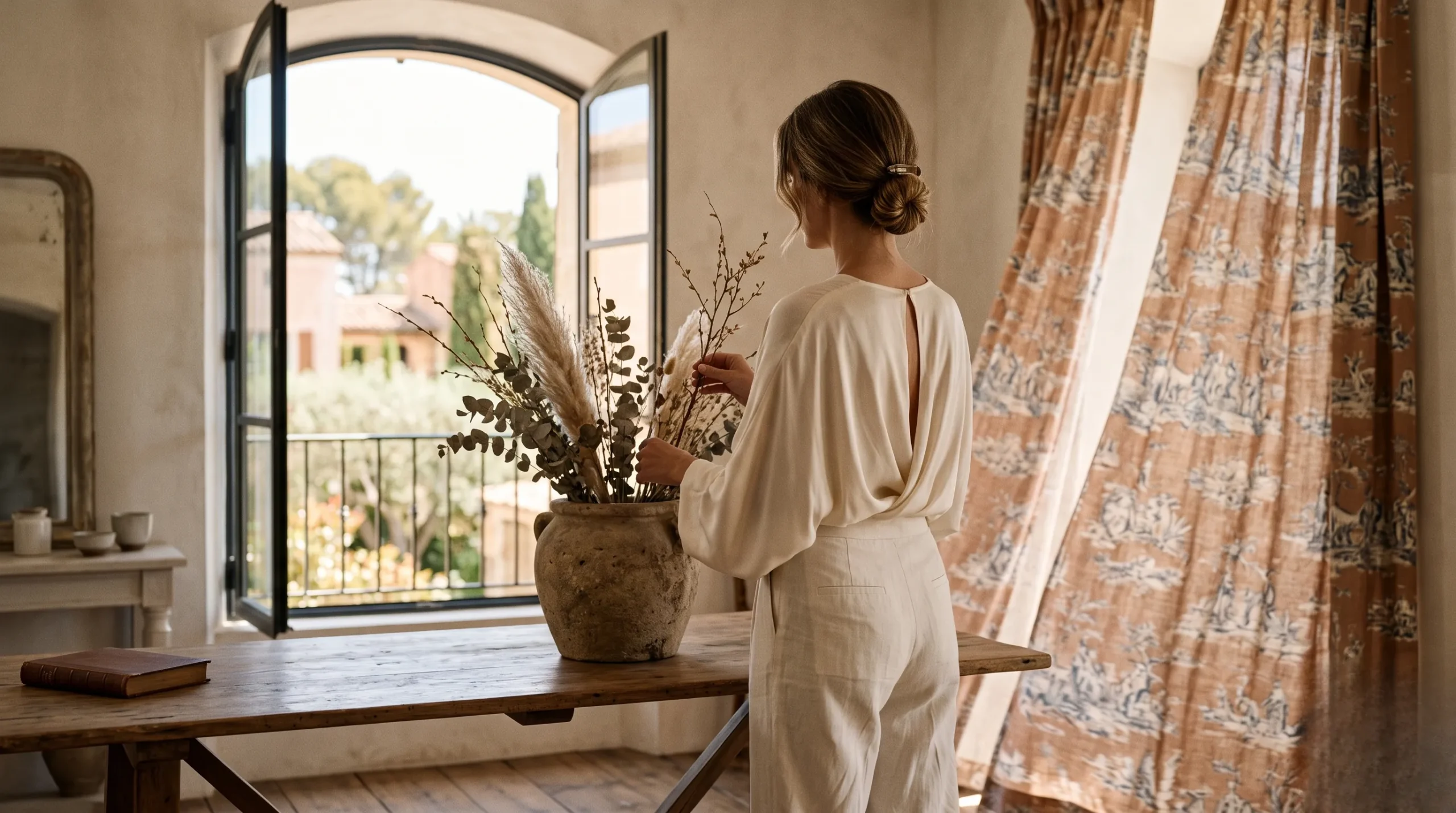
The true beauty of classical prints lies in their meticulous monochromatic palette. Finely engraved copper plates printed detailed allegories in Prussian blue, madder red, or deep charcoal onto unbleached cotton backgrounds. As shown in this analytical perspective on historical patterns, the scale of these illustrations requires careful consideration to maintain their narrative integrity.
The Narrative Power of Pastoral Scenes
Rather than mere decoration, these scenes captured the era’s philosophy, mixing mythological romance with idyllic country life. The precise draftsmanship ensures that each vignette tells a story, inviting the viewer to pause and appreciate the artistic depth woven into the fibers.
The Distinction
Classic Pastoral
Delicate, figurative scenes depicting romantic picnics, architectural ruins, and rural simplicity rendered with fine, copperplate-engraved precision.
Contemporary abstraction
Modern reinterpretations featuring tropical foliage, cheeky urban vignettes, or oversized monochromatic graphics scaled for minimalist urban lofts.
III. The 2026 Interior: Curating Toile in a Modern Estate
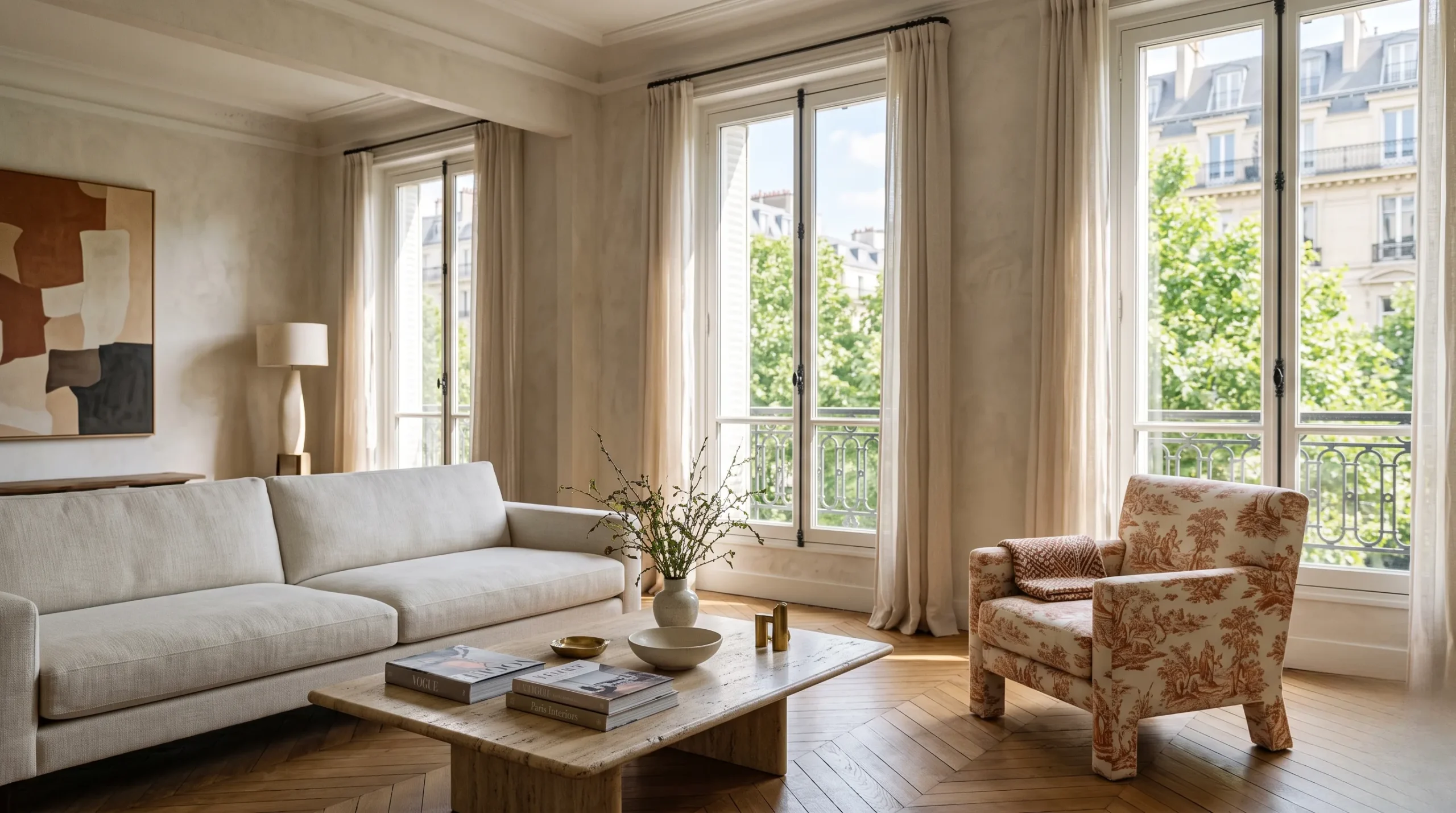
The Rule of Three: Scale and Placement
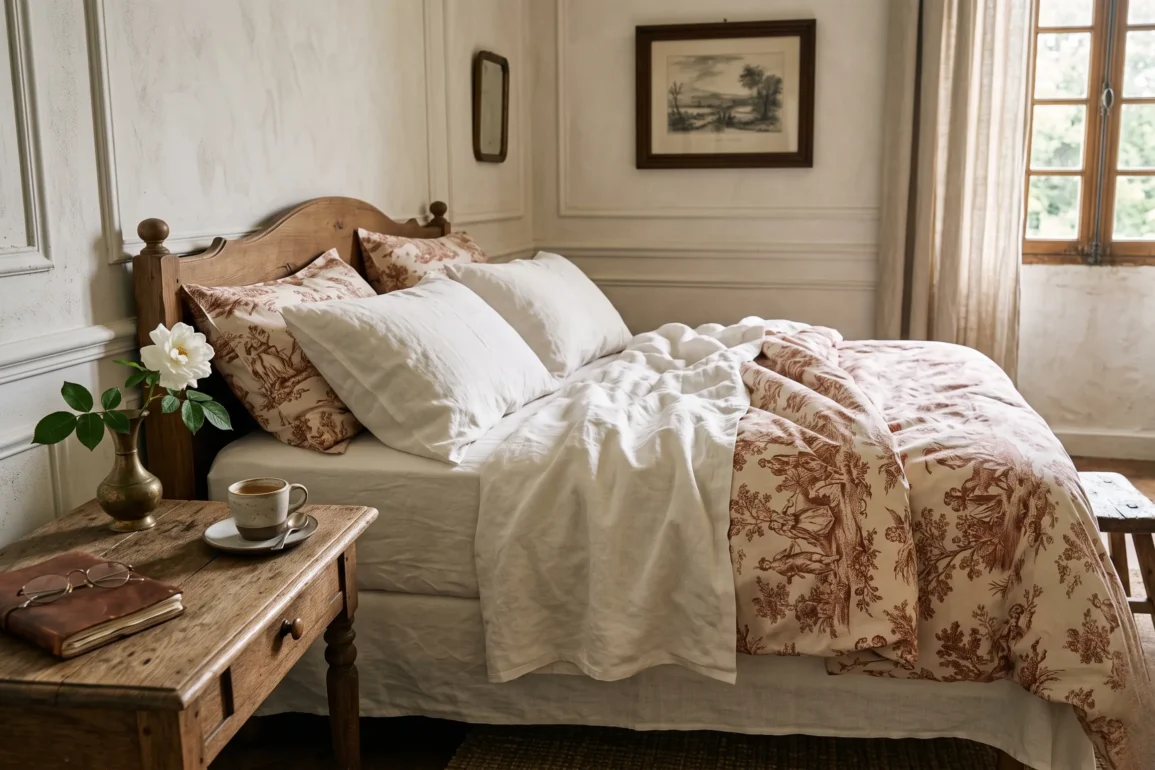
To introduce this print into a modern home, balance is essential. Avoid the cliché of the completely draped room, which feels suffocating. Instead, let a single accent piece, such as an upholstered chaise or a feature wall, speak for itself in an otherwise calm environment.
Mixing Toile with Raw Textures (Linen, Stone, Oak)
Pair the busy narrative print with quiet, raw materials. Ground the room with washed linen, solid white oak, and cool limestone to let the fabric breathe. For a complete masterclass in creating a balanced sanctuary, explore the secrets of a French Country Bedroom to elevate your home.
The Fabric Edit
1. Pierre Frey & Braquenié
The guardians of historic French archives, offering hand-blocked designs on heavy linen.
2. Schumacher & Dior Maison
Bold scales and contemporary colorways that bridge classic heritage with modern design sensibilities.
IV. The Connoisseur’s Eye: Investing in Authenticity
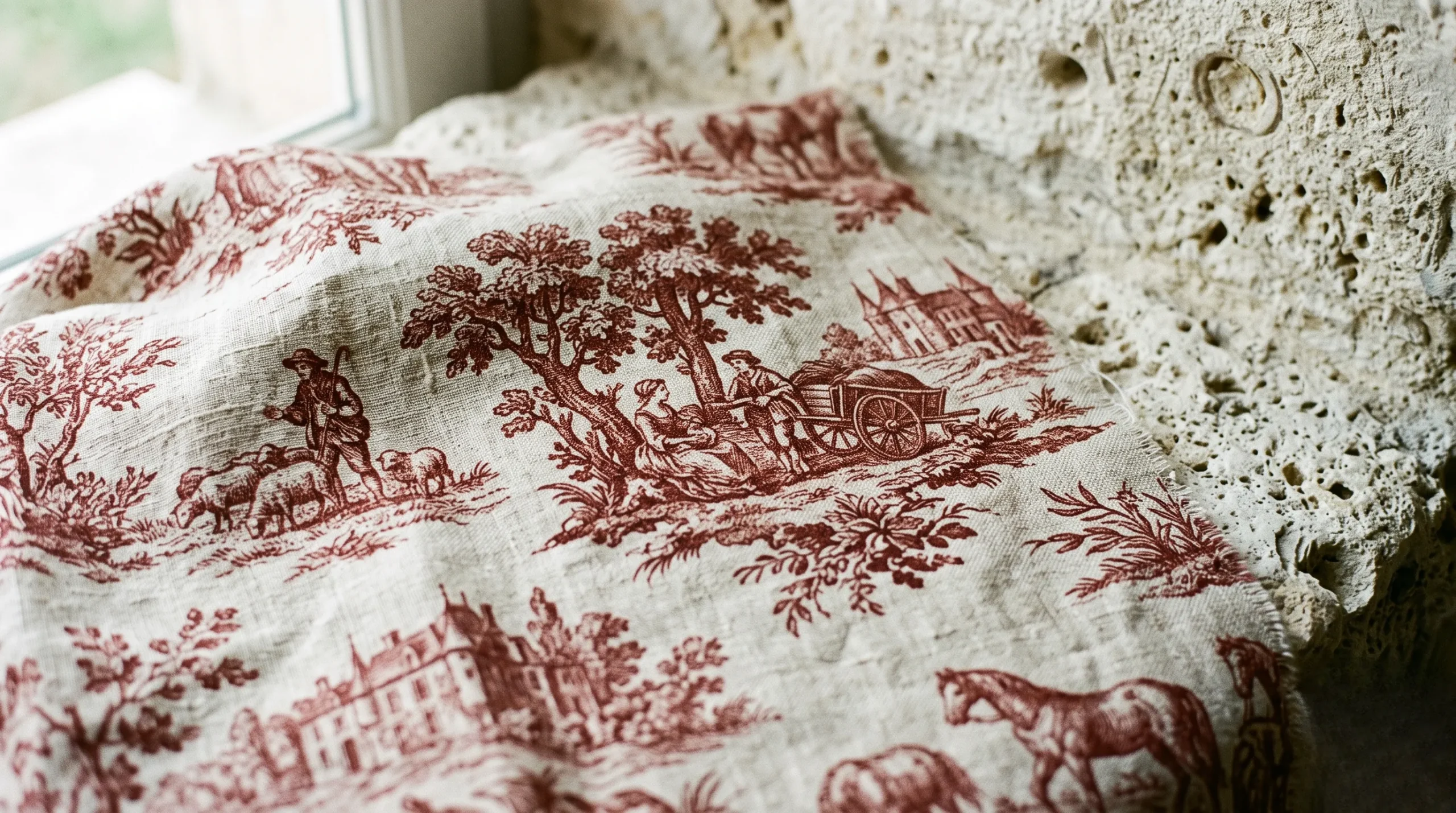
Hand-Printed vs. Digital Reproduction
To build an heirloom collection, you must look beyond modern mass-production. True heritage prints possess a tactile depth that digital replicas simply cannot mimic. When planning your estate gardens, as explored in our guide on French Garden Design, finding authentic details is essential.
Where to Source Antique Toile Remnants
Seek out reputable dealers at Paris flea markets, or look for certified historical reproductions. These pieces carry an irreplaceable patina, grounding your contemporary space in genuine French decorative history.
The Secret
To identify a genuine historic copperplate print, look for subtle registration shifts. Antique pieces display tiny irregularities where the hand-aligned design repeats, a charming hallmark of human craft missing from modern digital prints.
V. The Eternal Allure of French Craft
Investing in the quiet poetry of toile de jouy is more than a design choice; it is a commitment to keeping timeless French artistry alive in our modern homes. By focusing on authentic materials and thoughtful placement, you ensure this historic print remains a symbol of elegance for generations to come.
Rule for the 2026 Edit
Let the patterns breathe: always balance a statement printed textile with at least two solid, unadorned natural textures.
Which classic colorway captures the spirit of your estate: the romantic madder red or the serene Prussian blue? ✨