


Palais Garnier
Experience the Palais Garnier in its final year of full splendor before the 2027 technical renovations. Secure a private, after-hours tour to witness the Grand Escalier and Chagall ceiling without the crowds. This 2026 window is the ultimate time for insiders to appreciate the “Quiet Luxury” of Paris’s most iconic opera house.
Palais Garnier: How to See It Before the Grand Restoration
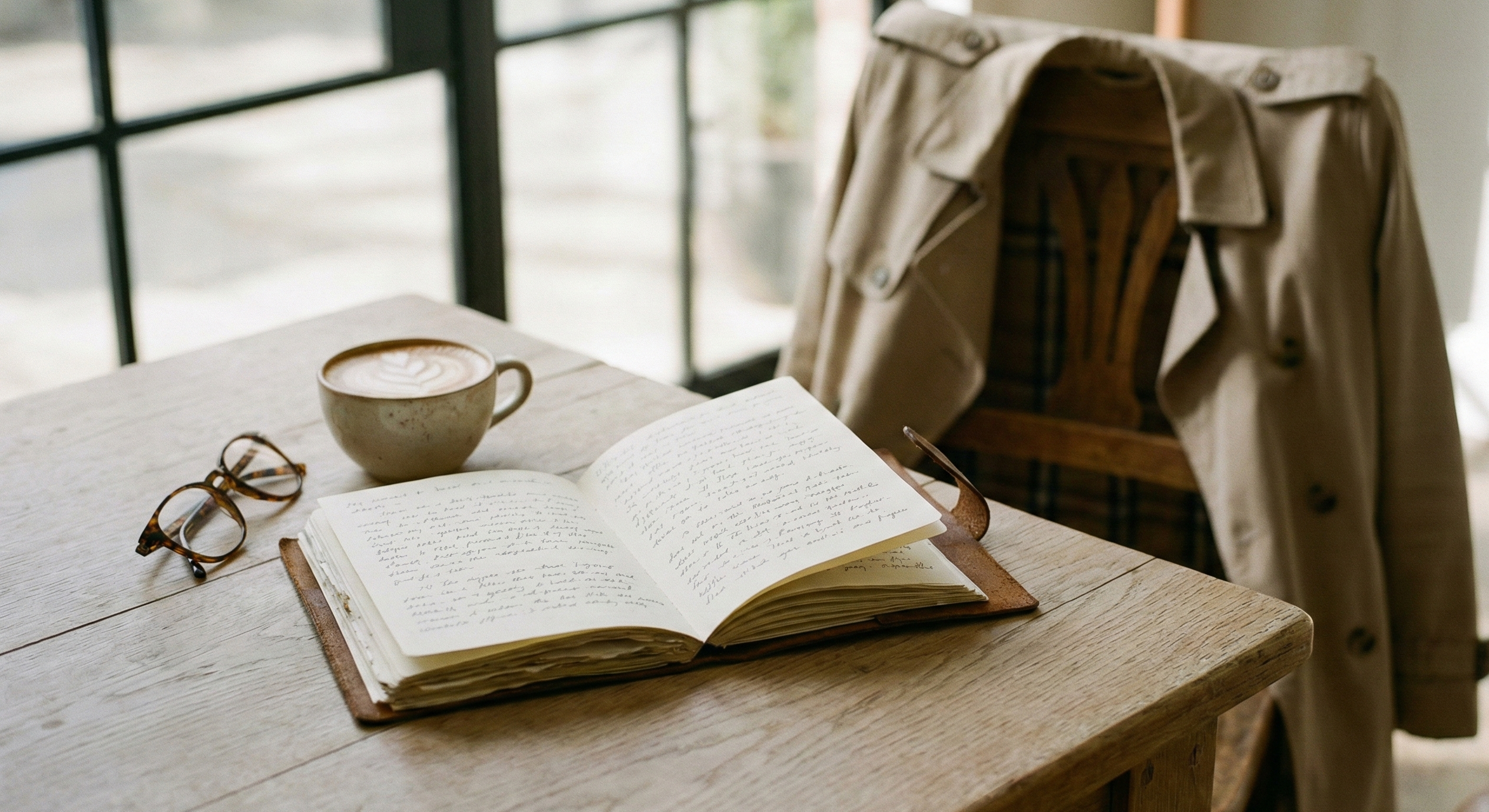
Close your eyes and imagine the scent of centuries-old beeswax, heavy silk damask, and the faint, cool draft emanating from a stage that has hosted the world’s greatest ghosts. It is 5:30 PM.
The restless throngs of daytime tourists have been ushered out, and the heavy oak doors of the Palais Garnier click shut with a resonant thud, leaving you in a silence so profound it feels like a physical presence.
This is the Paris I want you to know. Not the one viewed through a flickering smartphone screen over a stranger’s shoulder, but the one experienced in the hushed, amber shadows of Second Empire opulence.
As we move through 2026, the urgency to visit this temple of art has never been higher. We are standing at the threshold of a major shift, making this the “Final Golden Year” for those who value heritage in its purest form.
Beyond the Velvet Rope: Why a Private Tour is Non-Negotiable in 2026
The Palais Garnier is currently facing a pivotal moment.
With extensive technical renovations scheduled for 2027, including a complete modernization of the stage and fly tower, 2026 represents your last opportunity to see the theater in its uninterrupted, historic state.
While the building typically accommodates over 4,000 visitors a day, a private after-hours tour allows you to bypass the chaos.
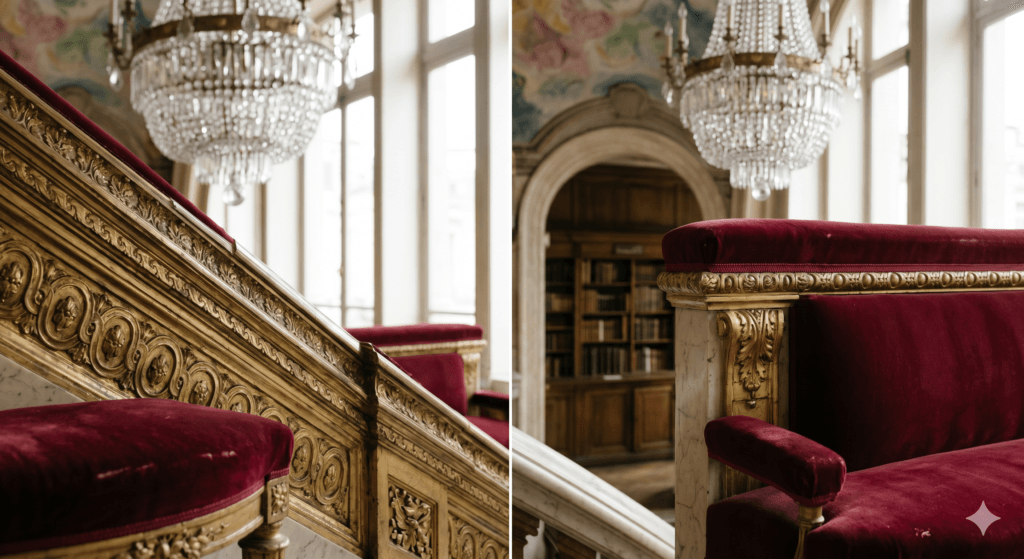
You aren’t just visiting a monument; you are stepping into a living jewelry box. In the world of Quiet Luxury, true wealth is found in access and silence.
There is no greater luxury in Paris than standing at the base of the Grand Escalier without a single soul in sight.
Always coordinate your private tour for the 5:00 PM slot in the late autumn or winter. As the sun dips below the Haussmannian rooftops of the Place de l’Opéra, the “Golden Hour” light filters through the windows of the Grand Foyer. The way the setting sun hits the 24-karat gold leaf creates a glow that no camera can truly capture, it is the building’s soul laid bare.
Architectural Mastery: From the Grand Staircase to the Chagall Ceiling
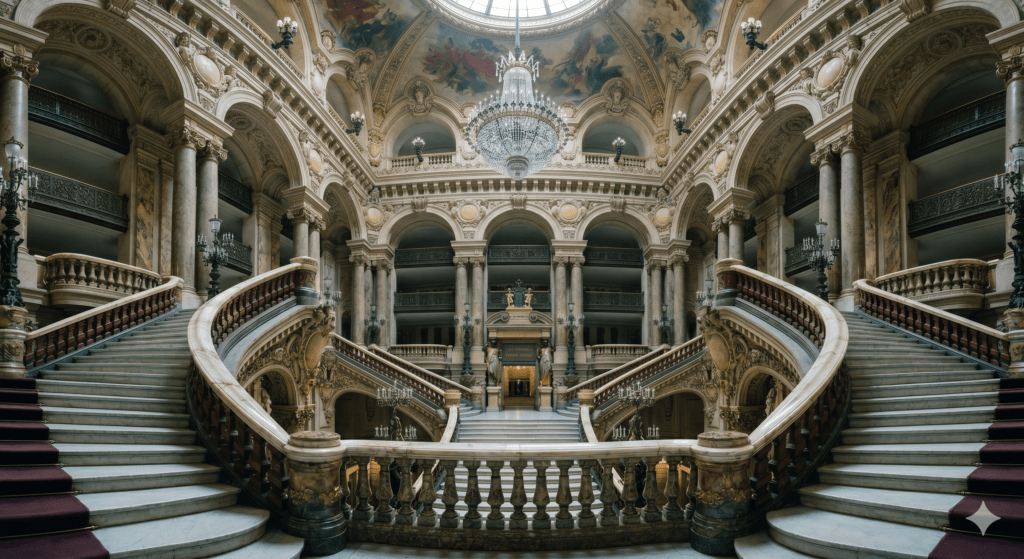
Every square inch of the Palais Garnier was designed to be a stage, even for those who never stepped foot behind the curtain.
Charles Garnier’s masterpiece was built so the elite of the 19th century could perform the ritual of “seeing and being seen.”
The Grand Escalier, carved from white marble from Seravezza and accented with red and green Swedish marble, was the ultimate runway.
When you stand here alone, you truly understand the scale of Garnier’s ambition. It is architectural theater at its finest, a place where the stone itself seems to breathe with the memory of thousands of silk gowns sweeping across its surface.
The Scandal of the Ceiling: A Modern Masterpiece
When you eventually look up in the main auditorium, you are met with a burst of vibrant color that feels almost defiant against the surrounding gilt.
The Marc Chagall ceiling, commissioned in 1964, was initially a source of immense scandal. Traditionalists were horrified by the juxtaposition of Chagall’s surrealism within a classic structure.
Today, it is the building’s most cherished feature.
During a private viewing, you can take the time to identify the scenes from famous operas, Mozart, Wagner, Berlioz, depicted in his ethereal, floating style.
It serves as a reminder that heritage is a living thing, constantly layered with new genius.
The Hidden Library: A Scholar’s Sanctuary
Many visitors rush past the Bibliothèque-Musée de l’Opéra.
Do not make that mistake. This library-museum houses three centuries of operatic history, including original set models that look like intricate, haunted dollhouses.
It is the quietest corner of the palace and a favorite haunt for those who appreciate the craftsmanship of the past and the weight of archival paper.
Separating Myth from Reality: The Phantom’s Legacy
We cannot discuss the Palais Garnier without acknowledging the Ghost. Gaston Leroux’s famous novel wasn’t entirely a work of fiction; it was inspired by the building’s very real, very complex subterranean structure.
While your guide will point out Box 5 permanently reserved for the “Opera Ghost” and offering a uniquely obstructed view of the stage, the real mystery lies beneath.
There is indeed a water tank under the stage, built to stabilize the foundations against the high water table of Paris. It isn’t a lair, but the engineering is as fascinating as any ghost story.
It’s a testament to the unseen labor and structural brilliance that keeps such a massive monument standing after 150 years.
The 2027 Countdown: Navigating the Upcoming Renovations
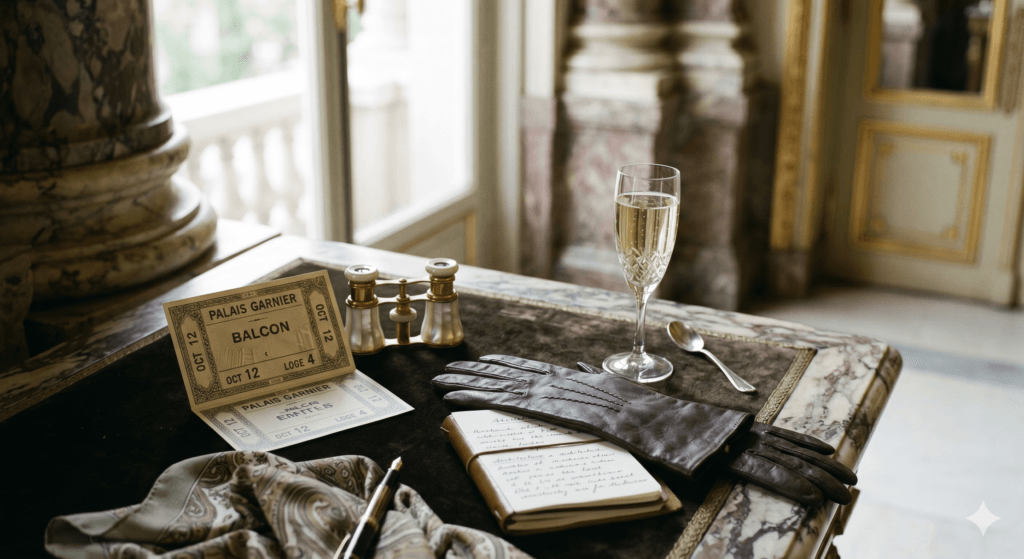
Transparency is the hallmark of a true insider. Starting in mid-2027, the Palais Garnier will undergo a multi-year renovation project.
The historic stage will be closed to modernize the 19th-century machinery that, while charming, can no longer support the weight of modern production demands.
While the Grand Foyer and the museum are expected to remain partially accessible, the full “Opera House experience” will be significantly altered by scaffolding and restricted zones.
This makes 2026 the crucial window for the discerning traveler. If the Palais Garnier has been on your bucket list, now is the time to secure your place before the curtains close for this technical hiatus.
Crafting Your Visit: Tickets, Timing, and Dress Codes
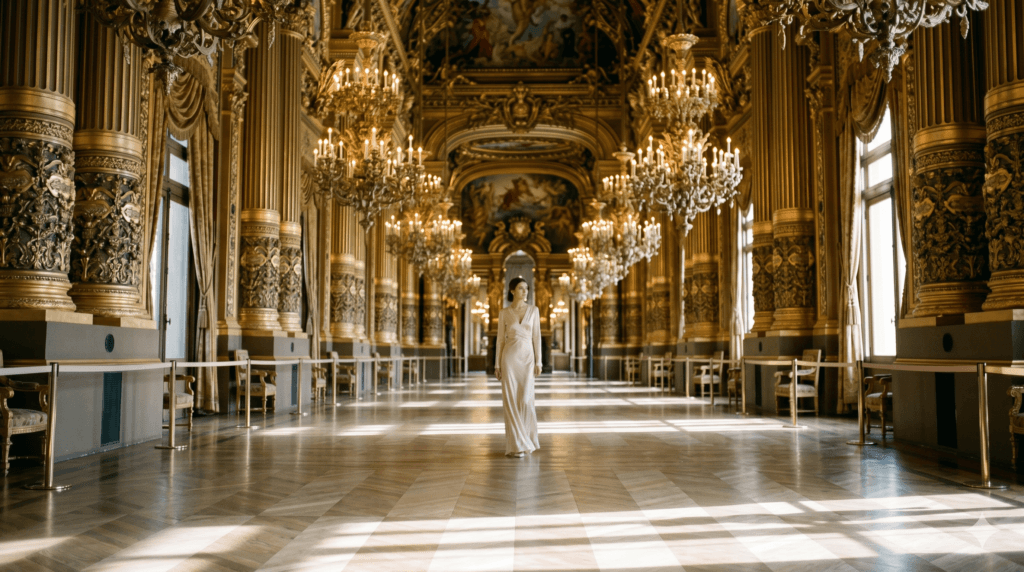
Booking a luxury Paris travel experience requires foresight. Private tours must be arranged months in advance through official partners or high-end concierge services.
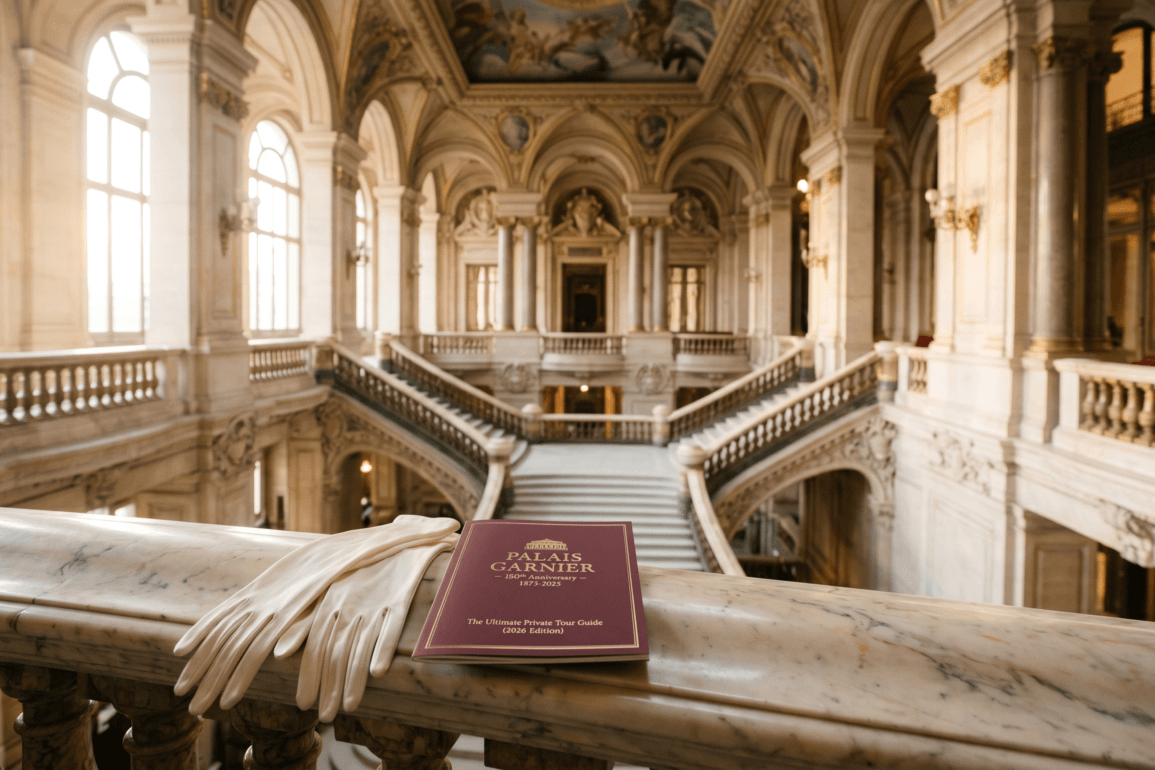
Regarding the dress code: while daytime tours are casual, a private after-hours visit demands a certain level of reverence. I always suggest “Parisian Chic”, a well-cut blazer, a silk scarf, or a classic trench.
You are entering a temple of culture; dress for the occasion. Focus on cost-per-wear investments like a beautiful pair of leather loafers or ballet flats, as you will be traversing a significant amount of marble and velvet.
As you exit back into the bustling lights of 2026 Paris, you’ll carry with you the silence of the Palais Garnier. It is a rare gift in a loud world.
If you could spend an hour alone in any room of the Palais Garnier, would you choose the golden Grand Foyer or the mysterious shadows of Box 5?