


La Bise
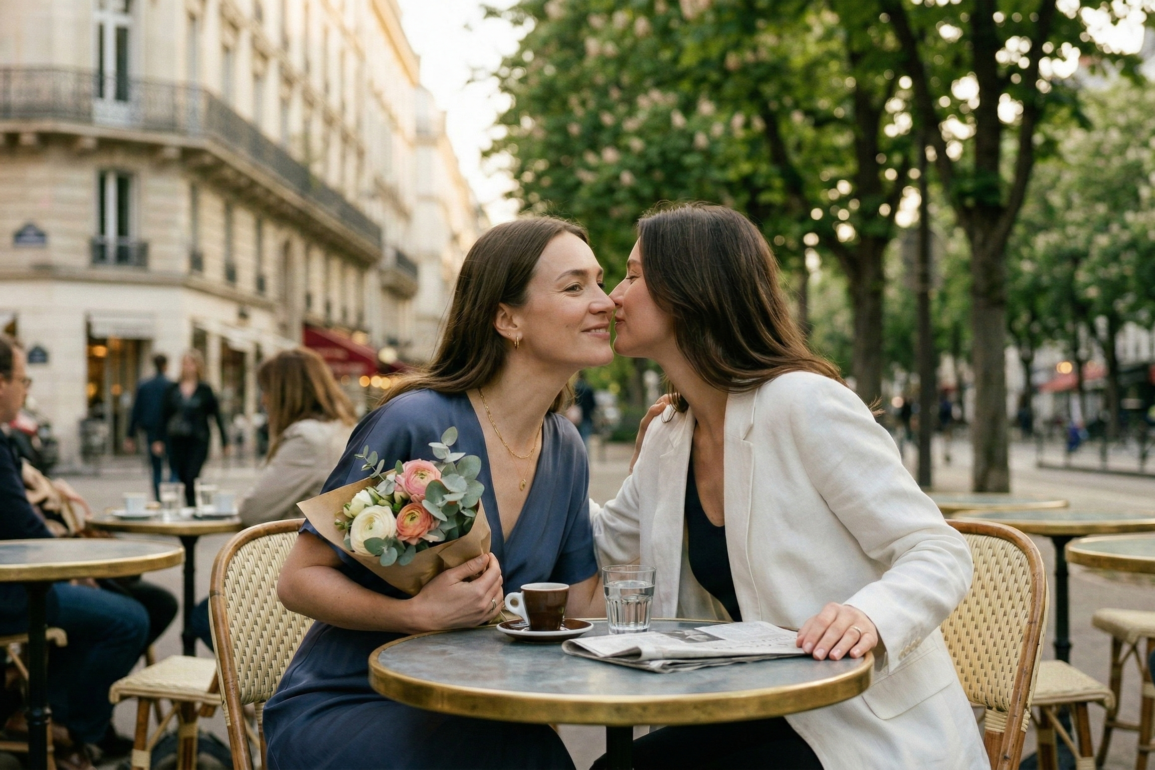
La bise is the quintessential French greeting, evolving in 2026 into a more intentional social ritual. In Paris, two kisses are standard, while southern regions may expect three or four. Always lead with the right cheek and maintain light cheek-to-cheek contact without actual lip placement. For professional settings, stick to a handshake until a closer rapport is established.
The Art of La Bise: A Modern Guide to France’s Most Misunderstood Greeting
Imagine the soft rustle of a Hermès silk scarf, the faint, sophisticated trail of a Diptyque fragrance, and the rhythmic mwah-mwah echoing through a sun-drenched Parisian café.
To the outsider, la bise, the traditional French cheek-kiss, can feel like a minefield of social anxiety. But for the woman who moves through the world with “Quiet Luxury” in mind, it is a choreographed ritual of social acceptance and warmth that transcends a mere “hello.”
In 2026, the rules of engagement have evolved.
We no longer kiss everyone blindly; instead, we treat la bise as a deliberate social seal of intimacy and respect.
I. Beyond the Cheek: The Cultural Weight of La Bise
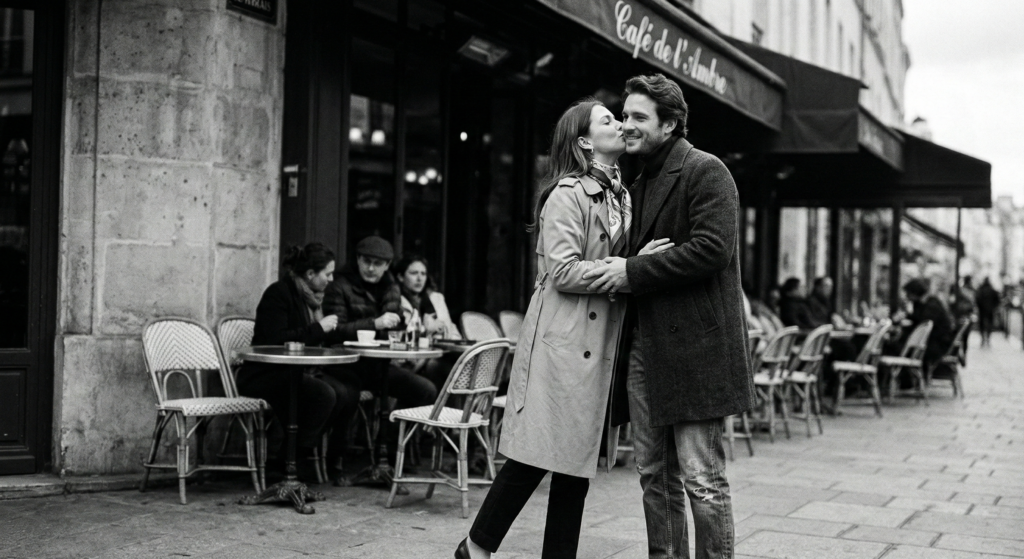
Contrary to what you might see in rom-coms, la bise is rarely romantic. It is a fundamental element of French social etiquette that signals you are no longer a stranger. It is the bridge between a formal “Bonjour” and a true friendship.
While the world shifted toward distance recently, the French have reclaimed the kiss, often accompanied by those amusing French phrases that define a warm welcome, with a new sense of intentionality.
Today, leaning in for la bise signifies a choice to connect, making the gesture more meaningful than ever in high-society circles.
Always lead with your right cheek. In the high-stakes world of Parisian social codes, leading with the left is the quickest way to have an accidental, and very awkward—collision of the lips. If you find yourself in a “hesitation dance,” simply pause, smile, and let the local lead.
II. The Regional Geometry: 2, 3, or 4?
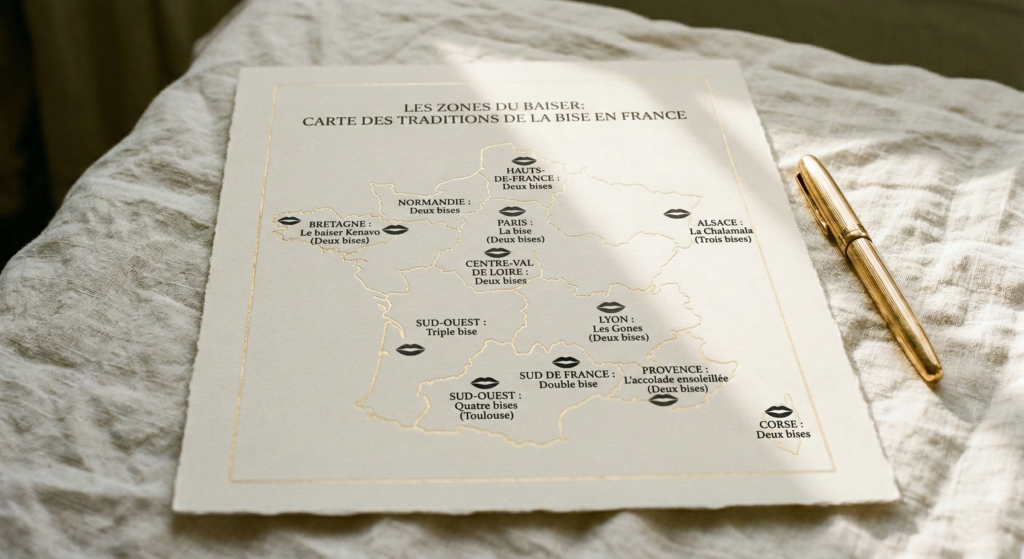
One of the most frequent questions from my American readers is: “How many kisses is enough?”
The answer, quite literally, depends on your GPS coordinates. France is a patchwork of regional traditions, and getting the number right is a subtle sign of a truly seasoned traveler.
Two is the gold standard. Crisp, efficient, and chic.
Be prepared for three (Montpellier). It reflects the warmer, more expansive nature of the Mediterranean. Be prepared for two in Marseille.
In these charming pockets, you might even encounter four.
If you are at a cocktail party in a Haussmann apartment, stick to two. If you are visiting a vineyard in the Loire Valley, watch your host, they may linger for a third.
III. The New Codes: Etiquette in the 2020s
In a professional setting at a firm in La Défense, the rules differ significantly from a private dinner. For a first-time business meeting, a firm, dry handshake or a polite nod is the standard.
Save la bise for the third meeting, or once a deal has been toasted over a long déjeuner.
When preparing for close-contact greetings, your scent is your signature. Opt for something subtle and skin-close, perhaps a scent from Buly 1803, that whispers rather than screams.
Ensure your lipstick is set; you can find the most reliable non-transfer formulas by knowing what to buy at a French pharmacy before your next social engagement.
IV. The Mechanics of the Perfect Bise
The perfect la bise is an illusion. It is a light brush of the cheeks, accompanied by a soft, aspirated kissing sound.
- The Contact: It should be cheek-to-cheek. There is no moisture involved.
- The Sound: A subtle “mwah” is fine, but avoid anything too theatrical or loud.
- The Pressure: Light as a feather. Never “cling” or pull the other person toward you; the French value their physical autonomy.
V. Navigating the Faux Pas
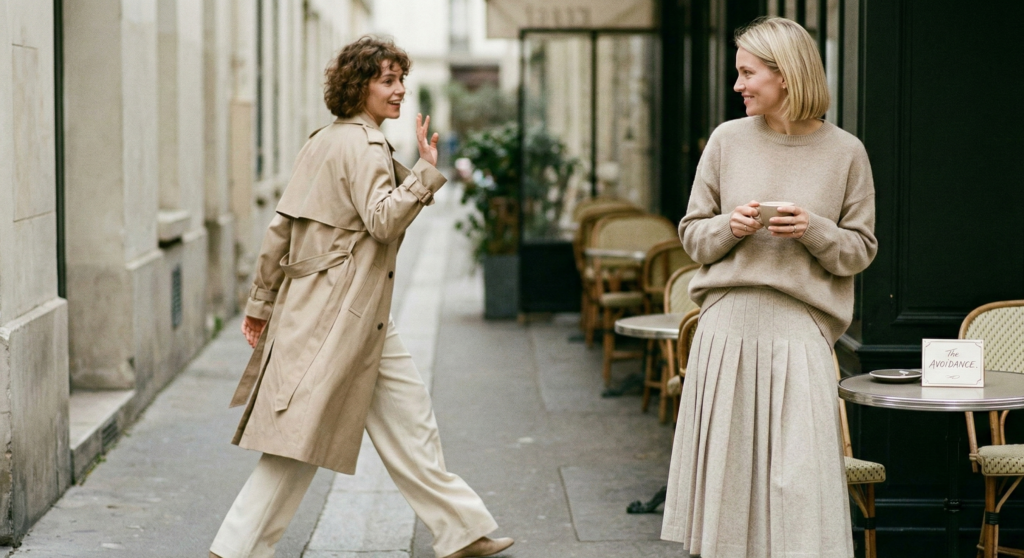
We have all been there: the “stiff neck,” the accidental headbutt, or the dreaded “American Hug.”
In France, a full-body hug is considered deeply intimate—often more so than a kiss. If you aren’t sure, a warm smile and a slight tilt of the head is your safest “out.”
Modern la bise is about comfort. If you prefer to skip it, a simple “Bonjour” with direct eye contact is perfectly sophisticated.
The goal of la bise is to make the other person feel seen and welcomed into your circle.
What was your most memorable (or perhaps most awkward) experience with a French greeting, and how did you handle it?